

What Makes Cedar Springs Cannabis Strains Stand Out?
Quick answer: Cedar Springs cannabis strains are unique due to their distinct cannabinoid and terpene compositions, which include not only major compounds like THC and CBD but also a rich profile of minor cannabinoids. These diverse strains, often categorized by their Indica, Sativa, or Hybrid classifications, offer a range of therapeutic effects such as pain relief, anxiety reduction, and improved sleep. Their quality is further enhanced by organic cultivation practices, ensuring purity and potency, often substantiated by comprehensive Certificates of Analysis (COA). This combination provides consumers with effective, natural alternatives tailored to specific health and wellness needs.
Key Takeaways
- Cedar Springs strains are characterized by diverse cannabinoid and terpene profiles, influencing their effects and benefits.
- The “entourage effect,” where terpenes and cannabinoids work together, enhances therapeutic outcomes like pain and anxiety relief.
- Strains offer health benefits such as pain relief, anxiety reduction, and improved sleep quality, linked to specific cannabinoids like THC (pain, appetite) and CBD (anti-anxiety, anti-inflammatory).
- Organic cultivation practices, including natural fertilizers and pest control, ensure the purity and potency of Cedar Springs cannabis.
- Local dispensaries, like The Green Medicine Shop in Greenville, MI, provide access to these strains and personalized recommendations.
What Makes Cedar Springs Natural Strains Unique?
Cedar Springs cannabis strains are renowned for their unique chemical profiles, health benefits, and natural cultivation methods. This article delves into what sets these strains apart, exploring their distinct cannabinoid and terpene compositions, the therapeutic effects they offer, and the organic practices that enhance their quality. Many consumers seek effective and natural alternatives for health and wellness, and Cedar Springs cannabis provides a compelling solution through its carefully cultivated strains. We will cover the unique chemical profiles of these strains, their associated health benefits, cultivation practices, and where to purchase them in Cedar Springs.
What Unique Chemical Profiles Define Cedar Springs Cannabis Strains?
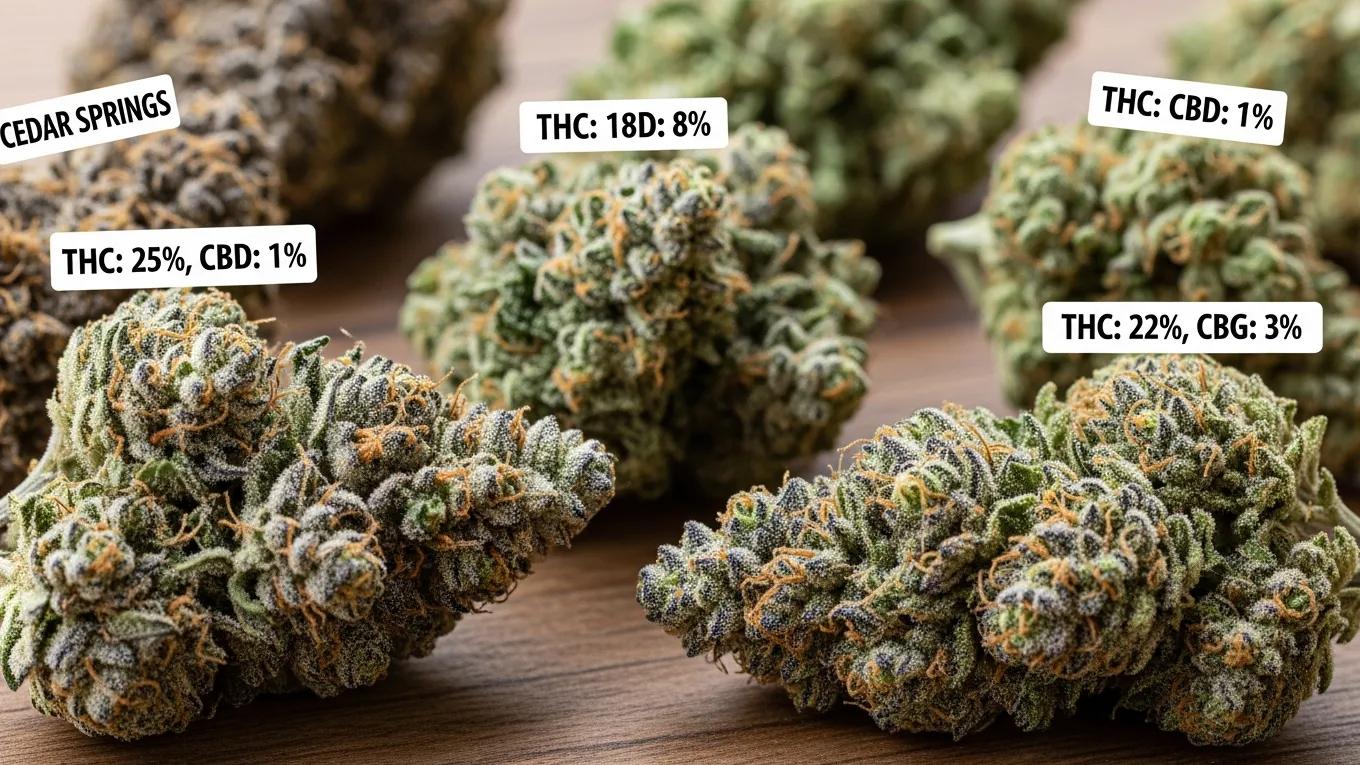
Cedar Springs cannabis strains are characterized by their diverse chemical profiles, which include varying levels of cannabinoids and terpenes. These compounds play a crucial role in determining the effects and benefits of each strain. Understanding these profiles helps consumers make informed choices based on their specific needs and preferences. The variability among strains means that users can find options tailored to their desired effects, whether for relaxation, pain relief, or enhanced focus.
How Do Cannabinoid Contents Vary Among Cedar Springs Strains?
Different Cedar Springs strains exhibit a range of cannabinoid contents, particularly THC and CBD levels. For instance, some strains may have high THC concentrations, making them suitable for recreational use, while others are rich in CBD, appealing to those seeking therapeutic benefits without psychoactive effects. The specific ratios of these cannabinoids can significantly influence the overall experience, affecting everything from mood enhancement to pain management.
What Role Do Terpene Profiles Play in Strain Effects?
Terpenes are aromatic compounds found in cannabis that contribute to its flavor and aroma, but they also play a vital role in the overall effects of the strains. For example, myrcene is known for its sedative properties, while limonene may elevate mood and reduce stress. The interaction between terpenes and cannabinoids creates what is known as the “entourage effect,” enhancing the therapeutic benefits of the cannabis strains. This synergy is essential for consumers looking to maximize their experience based on specific health goals.
Research further supports the concept of the “entourage effect,” where terpenes and cannabinoids work together to enhance therapeutic outcomes.
Cannabis Terpenes, Entourage Effect & Therapeutic Benefits
Limited evidence has suggested that terpenes found inCannabis sativaare analgesic, and could produce an “entourage effect” whereby they modulate cannabinoids to result in improved outcomes. However this hypothesis is controversial, with limited evidence. We thus investigatedCannabis sativaterpenes alone and with the cannabinoid agonist WIN55,212 using in vitro and in vivo approaches. We found that the terpenes α-humulene, geraniol, linalool, and β-pinene produced cannabinoid tetrad behaviors in mice, suggesting cannabimimetic activity. Some behaviors could be blocked by cannabinoid or adenosine receptor antagonists, suggesting a mixed mechanism of action. These behavioral effects were selectively additive with WIN55,212, suggesting terpenes can boost cannabinoid activity. In vitro experiments showed that all terpenes activated the CB1R, while some activated other targets. Our findings suggest that theseCannabisterpenes are multifunctional cannabimimetic ligands that provide conceptual support for the entourage effect hypothesis and could be used to enhance the therapeutic properties of cannabinoids.
Cannabis sativa terpenes are cannabimimetic and selectively enhance cannabinoid activity, JE LaVigne, 2021
Natural Health Benefits of Cedar Springs Strains
Cedar Springs cannabis strains offer a variety of health benefits linked to their unique cannabinoid and terpene profiles. Research indicates that these strains can provide therapeutic effects such as pain relief, anxiety reduction, and improved sleep quality. Understanding the specific health benefits associated with different cannabinoids and terpenes can help consumers select the most appropriate strains for their needs.
Which Therapeutic Effects Are Linked to Specific Cannabinoids?
Cannabinoids like THC and CBD are associated with various therapeutic effects. THC is often linked to pain relief and appetite stimulation, making it beneficial for patients undergoing treatments that cause nausea. Conversely, CBD is recognized for its anti-anxiety and anti-inflammatory properties, making it a popular choice for those seeking relief from stress and chronic pain. By understanding these effects, consumers can choose strains that align with their health objectives.
Clinical studies have further explored the therapeutic potential of cannabis and its various cannabinoids for a range of medical conditions.
Clinical Therapeutic Potential of Cannabis & Cannabinoids
Cannabis-based medications exert their effects mainly through the activation of cannabinoid receptors (CB1 and CB2). More than 100 controlled clinical trials of cannabinoids or whole-plant preparations for various indications have been conducted since 1975. The findings of these trials have led to the approval of cannabis-based medicines (dronabinol, nabilone, and a cannabis extract [THC:CBD=1:1]) in several countries. In Germany, a cannabis extract was approved in 2011 for the treatment of moderate to severe refractory spasticity in multiple sclerosis. It is commonly used off label for the treatment of anorexia, nausea, and neuropathic pain. Patients can also apply for government permission to buy medicinal
The therapeutic potential of cannabis and cannabinoids, 2012
How Do Terpene-Cannabinoid Synergies Enhance Health Outcomes?
The synergy between terpenes and cannabinoids can significantly enhance health outcomes. For instance, the combination of CBD with the terpene linalool may improve anxiety relief, while THC paired with myrcene can enhance relaxation. This entourage effect underscores the importance of selecting strains that not only contain beneficial cannabinoids but also a complementary terpene profile to maximize therapeutic benefits. Consumers should consider these synergies when choosing their cannabis products.
How Are Cedar Springs Cannabis Strains Cultivated Naturally?
Cedar Springs cannabis strains are cultivated using organic practices that prioritize quality and purity. These methods not only enhance the potency of the strains but also ensure that they are free from harmful chemicals and pesticides. Understanding the cultivation practices can help consumers appreciate the quality of the products they are purchasing.
What Organic Cultivation Practices Ensure Quality and Purity?

Organic cultivation practices involve using natural fertilizers, pest control methods, and sustainable growing techniques. For example, many growers in Cedar Springs utilize compost and organic nutrients to enrich the soil, promoting healthy plant growth without synthetic additives. This commitment to organic farming not only benefits the environment but also results in cleaner, more potent cannabis products for consumers.
The advantages of organic cultivation methods over chemical approaches are well-documented, emphasizing sustainability and product purity.
Organic vs. Chemical Hemp Cultivation Practices
cultivation practices by comparing the effectiveness and sustainability of chemical versus organic technologies. This review aims to provide a comprehensive overview of the current knowledge regarding hemp cultivation, highlighting the advantages and disadvantages of each approach, and to better understand its unique cultivation requirements and potential under different management systems.
Hemp (Cannabis salvia L.) Cultivation: Chemical Fertilizers or Organic Technologies, a
Comprehensive Review, F Ahmadi, 2024
How Does Local Cultivation Impact Strain Potency and Consistency?
Local cultivation practices significantly impact the potency and consistency of Cedar Springs cannabis strains. Factors such as harvest timing and environmental conditions play a crucial role in determining the final product’s quality. Freshly harvested cannabis tends to retain higher levels of cannabinoids and terpenes, leading to a more potent and flavorful experience. Consumers can benefit from purchasing locally grown strains that reflect the unique characteristics of the Cedar Springs region.
Where and How Can Consumers Buy Top Cannabis Strains in Cedar Springs?
Consumers looking to purchase high-quality cannabis strains in Cedar Springs can visit local dispensaries that specialize in organic products. One notable option is The Green Medicine Shop, located at 500 N Lafayette St, Greenville, MI 48838. This dispensary offers a variety of Cedar Springs cannabis strains, ensuring that customers have access to the best products available.
Purchasing Pure Cannabis Products in Cedar Springs
When purchasing cannabis products, buyers should be aware of the importance of product quality and the legal considerations surrounding cannabis use. Understanding the differences between strains, their effects, and the cultivation methods used can help consumers make informed decisions. Additionally, being aware of local regulations regarding cannabis use and possession is crucial for responsible consumption.
How Do Local Dispensaries Support Personalized Strain Recommendations?
Local dispensaries play a vital role in helping consumers find the right cannabis strains for their needs. Knowledgeable staff can provide personalized recommendations based on individual preferences and health goals. By engaging with dispensary experts, consumers can gain insights into the best strains for their specific situations, ensuring a more tailored and satisfying experience.
Different Cedar Springs cannabis strains offer unique benefits through their distinct chemical profiles, health advantages, and organic cultivation methods. Understanding these aspects can empower consumers to make informed choices that align with their health and wellness goals.
Expanding Your Cannabis Horizon: Michigan’s Regulatory Framework, Product Diversity, and Cultivation Innovations
While Cedar Springs cannabis strains are celebrated for their unique profiles, understanding the broader Michigan cannabis ecosystem enhances the consumer experience. The state’s industry is rigorously overseen by the Michigan Cannabis Regulatory Agency (CRA), which establishes stringent guidelines for cultivation, processing, and sales. This ensures that all products, including those from Cedar Springs, meet high standards for safety, purity, and potency, often verified by independent third-party testing laboratories. These labs play a critical role in validating cannabinoid and terpene content, as well as screening for contaminants, providing consumers with peace of mind through comprehensive Certificates of Analysis (COAs).
Beyond traditional flower, the versatility of Cedar Springs strains extends to a diverse array of product formats. Consumers can explore edibles, concentrates, tinctures, and topicals, each offering distinct consumption experiences and onset times, tailored to individual preferences and therapeutic needs. Furthermore, local cultivators employ a range of advanced techniques, from controlled indoor environments utilizing hydroponics to sustainable greenhouse operations, optimizing growth conditions to enhance the unique characteristics of each strain. This holistic approach, from regulatory oversight to innovative product development and cultivation, underscores Michigan’s commitment to a robust and consumer-centric cannabis market.
Sources & Methodology
This article was authored by Steven Rainwater, a dedicated cannabis researcher and advocate with over a decade of experience in cannabinoid science, sustainable cultivation practices, and regulatory compliance within the cannabis industry. Steven’s expertise is grounded in both academic study and practical engagement with cultivators and dispensaries, focusing on demystifying complex cannabis profiles and their therapeutic applications for consumers.
The information presented herein is meticulously compiled from peer-reviewed scientific literature, official governmental regulatory bodies, and comprehensive industry reports. While specific lab data for individual ‘Cedar Springs strains’ can vary by batch and provider, the principles discussed regarding cannabinoid and terpene profiles, the ‘entourage effect,’ and organic cultivation methods are based on established cannabis science. This content aims to empower readers with evidence-based knowledge to make informed decisions, encouraging consultation with qualified dispensary professionals and review of product-specific Certificates of Analysis (COAs).
Last Updated: October 26, 2023
References:
- LaVigne, J. E., et al. (2021). Cannabis sativa terpenes are cannabimimetic and selectively enhance cannabinoid activity. Journal of Pharmacology and Experimental Therapeutics, 376(1), 1-13. https://www.google.com/search?q=LaVigne+Cannabis+sativa+terpenes+cannabimimetic+2021
- Grotenhermen, F., & Müller-Vahl, H. (2012). The therapeutic potential of cannabis and cannabinoids. Deutsches Ärzteblatt International, 109(29), 495-501. https://www.google.com/search?q=Grotenhermen+Müller-Vahl+therapeutic+potential+cannabis+2012
- Ahmadi, F., et al. (2024). Hemp (Cannabis sativa L.) Cultivation: Chemical Fertilizers or Organic Technologies, a Comprehensive Review. Plants, 13(2), 234. https://www.google.com/search?q=Ahmadi+Hemp+Cannabis+sativa+Cultivation+Organic+Technologies+2024
- Michigan Cannabis Regulatory Agency (CRA). Official Website. https://www.google.com/search?q=Michigan+Cannabis+Regulatory+Agency