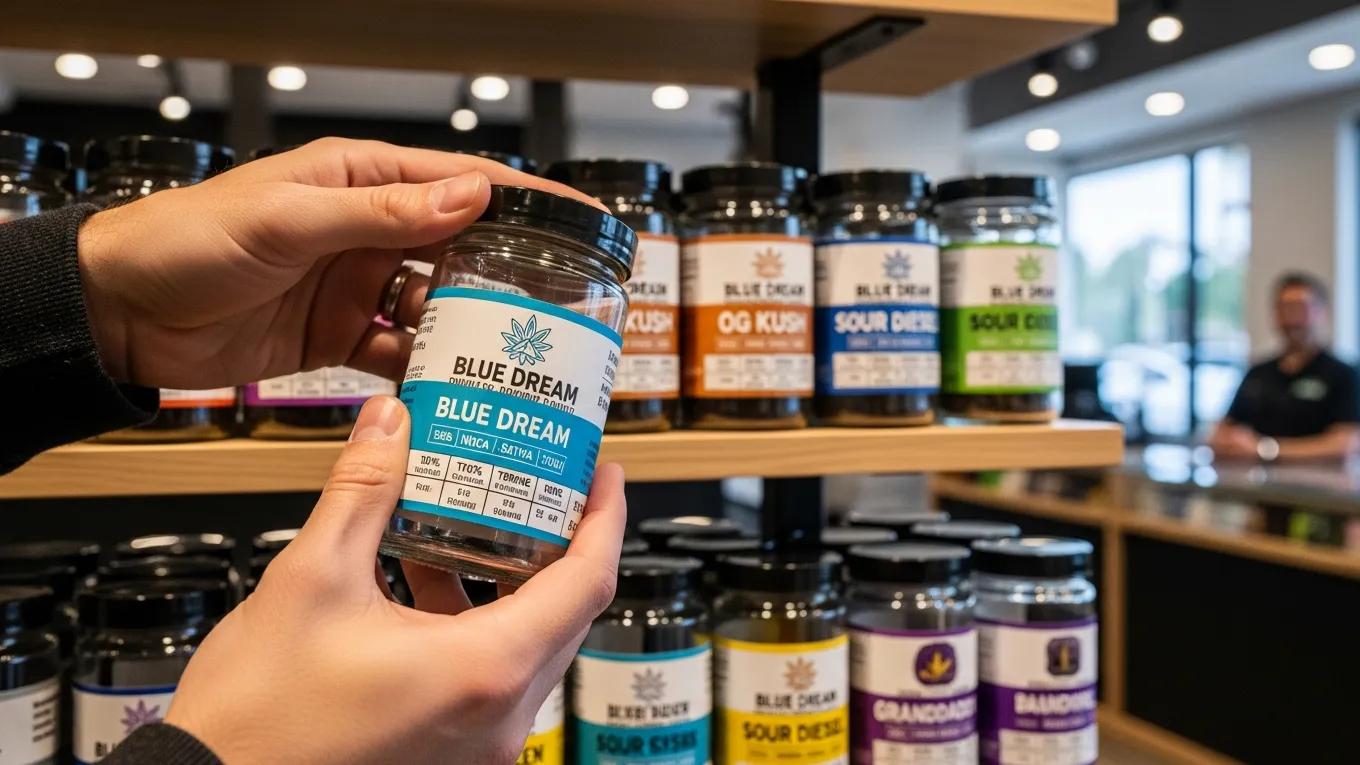
Best Sativa Strains for Energy, Focus & Creativity

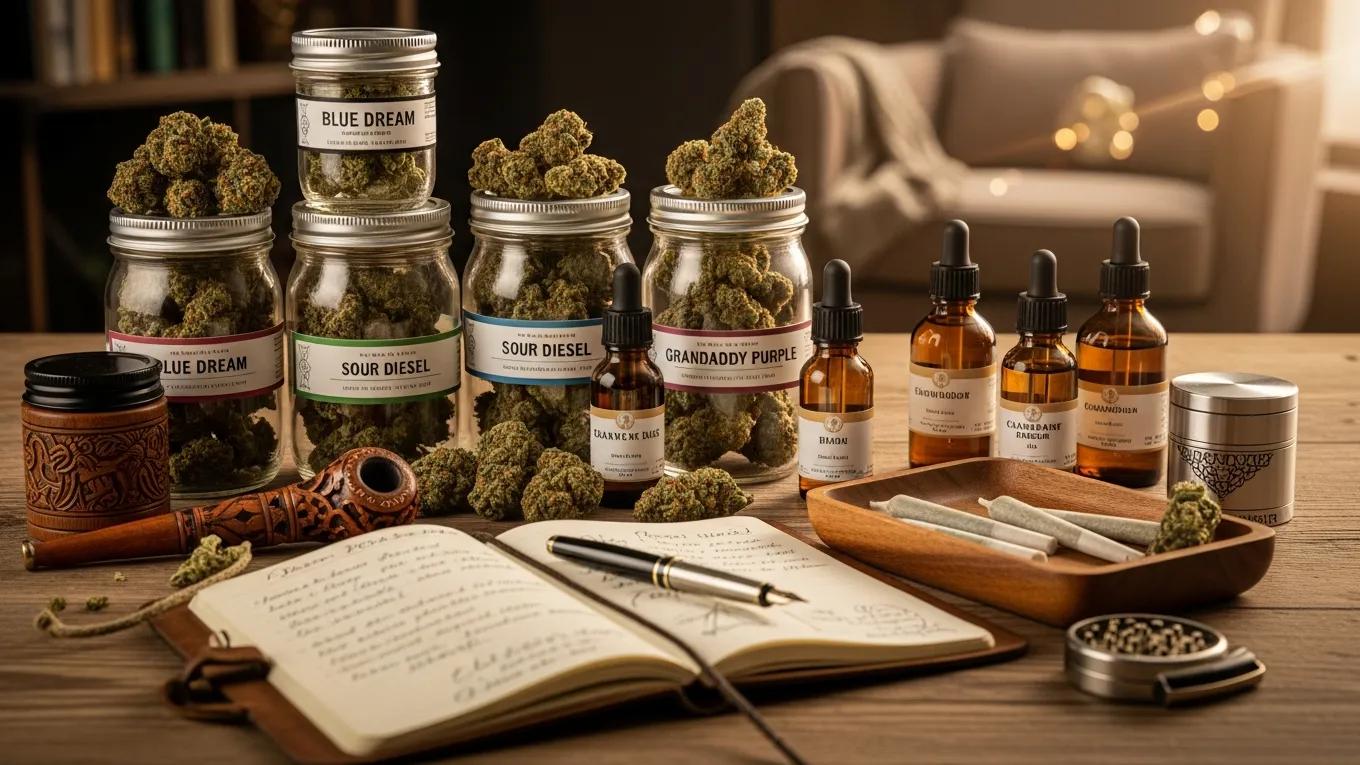
For those seeking a natural boost to energy, focus, and creativity, certain sativa cannabis strains have long been favored. These varieties are often associated with an uplifting and invigorating experience, making them popular choices for daytime use or for stimulating mental activity.

Quick answer: The best sativa strains for energy, focus, and creativity typically include Durban Poison, Green Crack, Jack Herer, and Super Lemon Haze, characterized by high THC content and energizing terpenes such as limonene, pinene, and terpinolene that interact to uplift mood and enhance mental clarity.

Key Takeaways

  • Energizing sativa strains like Durban Poison and Green Crack are renowned for their uplifting and focus-enhancing effects.
  • Terpenes such as limonene, pinene, and terpinolene play a crucial role in the stimulating properties of these strains.
  • While THC is the primary psychoactive cannabinoid, specific terpene profiles largely dictate the energizing experience.
  • Responsible consumption, starting with a low dose, is essential to avoid potential side effects like anxiety or paranoia.
  • The Green Medicine Shop in Cedar Springs, MI, offers a selection of these strains and expert guidance.

What Are the Best Sativa Strains for Energy, Focus, and Creativity?

Several sativa strains consistently receive high marks from users for their ability to provide an energetic and mentally stimulating experience. These strains are often sought after for daytime use when productivity, creativity, or social engagement are desired. Their unique cannabinoid and terpene profiles contribute to their distinct effects.

Here are some of the most highly regarded sativa strains for energy and focus:

  • Durban Poison: Originating from South Africa, Durban Poison is a pure sativa known for its clear-headed, uplifting, and energetic effects. It’s often described as a functional strain, perfect for boosting productivity or creativity. Its dominant terpenes typically include terpinolene, myrcene, and ocimene, contributing to its sweet, earthy, and piney aroma. Many users find it excellent for focus without significant anxiety.
  • Green Crack: Despite its provocative name, Green Crack is a popular choice for invigorating effects. This potent sativa is celebrated for its sharp energy and focus, often likened to a strong cup of coffee. It’s a favorite among those needing a boost to overcome fatigue or tackle creative projects. Its terpene profile is rich in myrcene, caryophyllene, and limonene, giving it a tangy, fruity flavor.
  • Jack Herer: Named after the cannabis activist, Jack Herer is a classic sativa-dominant hybrid that offers a blissful, clear-headed, and energetic high. It’s a balanced strain that provides both cerebral invigoration and a subtle body relaxation, making it versatile for various activities. Pinene, terpinolene, and caryophyllene are often prominent terpenes, yielding a spicy, piney aroma.
  • Super Lemon Haze: A multi-award-winning sativa-dominant hybrid, Super Lemon Haze is cherished for its zesty, citrusy aroma and uplifting effects. Users report a burst of energy, creativity, and mood elevation, making it ideal for social gatherings or artistic endeavors. Its terpene profile is dominated by limonene, terpinolene, and caryophyllene, contributing to its distinct lemon flavor.
  • Sour Diesel: Famous for its pungent, fuel-like aroma, Sour Diesel is a potent sativa known for its fast-acting, energizing, and dream-like cerebral effects. It’s often chosen for stress relief and mood elevation, providing a boost without heavy sedation. Caryophyllene, limonene, and myrcene are common terpenes, giving it its characteristic diesel and citrus notes.
  • Strawberry Cough: This sativa-dominant strain is renowned for its sweet, strawberry-like aroma and flavor, along with its ability to induce an uplifting and euphoric head high. It’s often recommended for those seeking to alleviate stress and boost mood while maintaining clear-headedness and focus. Myrcene and alpha-pinene are key terpenes contributing to its unique profile.

How Do Sativa Strains Produce Energizing Effects?

The energizing effects associated with certain sativa strains are not solely due to their classification but rather the complex interplay of cannabinoids, particularly tetrahydrocannabinol (THC), and a diverse array of aromatic compounds known as terpenes. This synergistic relationship is often referred to as the “entourage effect,” a concept widely discussed in cannabis research, where multiple compounds work together to modulate the overall experience.

The Role of Cannabinoids

While THC is the primary psychoactive cannabinoid responsible for the euphoric high, its interaction with the body’s endocannabinoid system (ECS) can be influenced by other compounds. In energizing sativas, THC levels are typically high, contributing to the cerebral stimulation. Cannabinoids like THCV, though less common, are also being studied for their potential role in energy and appetite suppression, with some research suggesting it may contribute to the stimulating effects of certain sativas like Durban Poison.

The Influence of Terpenes

Terpenes are organic compounds found in cannabis that contribute to its distinctive aroma and flavor, but also play a significant role in modulating its effects. For energizing sativas, specific terpenes are often present in higher concentrations:

  • Limonene: Abundant in citrus fruits, limonene contributes a distinct lemon or orange aroma. In cannabis, it’s associated with mood elevation, stress relief, and an uplifting effect. Strains like Super Lemon Haze and Sour Diesel are often rich in limonene.
  • Pinene (Alpha-Pinene & Beta-Pinene): Found in pine needles and rosemary, pinene has a fresh, piney scent. It’s believed to promote alertness, memory retention, and counter some of the short-term memory impairment often associated with THC. Jack Herer and Strawberry Cough frequently feature significant pinene levels.
  • Terpinolene: With a complex aroma that can be floral, piney, and even slightly woody or smoky, terpinolene is often found in strains known for their uplifting and stimulating properties. It’s a dominant terpene in strains like Durban Poison and Jack Herer, contributing to their clear-headed effects.
  • Caryophyllene (Beta-Caryophyllene): Unique among terpenes, caryophyllene interacts directly with the CB2 receptors in the endocannabinoid system, much like a cannabinoid. Found in black pepper and cloves, it has a spicy, peppery aroma and is associated with anti-inflammatory properties, potentially contributing to a balanced and less anxious high in some energizing strains. Green Crack and Sour Diesel often contain notable levels of caryophyllene.

The combination and concentration of these terpenes, alongside THC, create the unique “personality” of each strain, guiding its overall energizing and focusing effects.

What Are the Typical Benefits of Energizing Sativa Strains?

Energizing sativa strains are frequently chosen for a variety of potential benefits that align with an active and productive lifestyle. These effects are distinct from the relaxing or sedating qualities often found in indica strains, offering a different kind of cannabis experience.

  • Enhanced Focus and Concentration: Many users report that certain sativas help sharpen their mental clarity, making it easier to concentrate on tasks, whether for work, study, or creative pursuits. The presence of terpenes like pinene is often cited as a contributing factor to this effect.
  • Increased Energy and Motivation: For individuals battling fatigue or seeking a boost to their daily routine, energizing sativas can provide a noticeable surge of energy and motivation. This can translate into greater physical activity or a renewed drive to complete projects.
  • Mood Elevation and Euphoria: These strains are well-known for their uplifting qualities, often inducing feelings of happiness, euphoria, and general well-being. This makes them popular for social situations or for combating feelings of lethargy or low mood.
  • Creativity Boost: Artists, writers, and other creative individuals often turn to energizing sativas to stimulate innovative thinking and overcome creative blocks. The cerebral stimulation can lead to new perspectives and ideas.
  • Social Engagement: The uplifting and mood-enhancing effects can make social interactions more enjoyable and less daunting for some individuals, promoting conversation and connection.

It’s important to remember that individual experiences can vary based on personal physiology, tolerance, and the specific strain consumed. Understanding how to choose cannabis strain effectively based on desired effects is key.

What Are the Potential Side Effects of High-Energy Sativas?

While energizing sativa strains offer many desirable effects, it’s crucial to be aware of potential side effects, especially with higher doses or for individuals sensitive to THC. Responsible consumption is paramount, and starting with a low dose is always recommended, particularly for those new to cannabis or specific strains.

  • Anxiety and Paranoia: For some individuals, especially those prone to anxiety, high doses of THC-rich sativas can trigger or exacerbate feelings of anxiety, nervousness, or paranoia. This is a common concern that can be mitigated by choosing strains with a more balanced cannabinoid/terpene profile or consuming in moderation.
  • Increased Heart Rate: THC can temporarily increase heart rate, which might be uncomfortable for some users. Individuals with pre-existing heart conditions should consult a healthcare professional before using cannabis.
  • Dry Mouth and Dry Eyes: These are common, mild side effects across many cannabis strains, including sativas. Staying hydrated can help alleviate dry mouth, and over-the-counter eye drops can address dry eyes.
  • Difficulty Sleeping: Given their energizing nature, consuming high-energy sativas too close to bedtime can interfere with sleep patterns. They are generally recommended for daytime use.
  • Dizziness: Some users may experience temporary dizziness, particularly if standing up too quickly after consumption.

Understanding the difference between indica vs sativa effects guide can help users make informed decisions to minimize unwanted side effects. If you experience persistent or severe side effects, discontinue use and consult a medical professional.

How to Choose the Right Energizing Sativa Strain

Selecting the ideal energizing sativa involves considering several factors beyond just the strain name. Your personal preferences, tolerance, and desired effects should guide your choice. Speaking with a knowledgeable budtender at a local dispensary like The Green Medicine Shop in Cedar Springs, MI, can provide invaluable personalized advice.

  1. Understand Your Tolerance: If you’re new to cannabis or specific strains, always start with a very small dose (e.g., one puff or a low-dose edible). Observe how your body reacts before increasing.
  2. Consider Terpene Profiles: Pay attention to the dominant terpenes. If you know you react well to limonene for mood lift or pinene for focus, seek out strains rich in those compounds. Information on what are terpenes in cannabis can help you understand these profiles better.
  3. Read Strain Descriptions and Reviews: Online resources and dispensary staff can offer insights into typical effects. Look for descriptions that align with your goals (e.g., “clear-headed,” “creative boost,” “social energy”).
  4. Method of Consumption: Flower provides immediate effects, while vaporizers offer a cleaner experience. Edibles have a delayed onset and longer-lasting effects, so start very low and wait at least an hour or two before considering more.
  5. Consult a Budtender: Trained professionals at dispensaries can provide specific recommendations based on their product knowledge and your stated preferences. They can guide you through the available options for recreational cannabis in Michigan.

Remember that even within the same strain, cannabinoid and terpene levels can vary slightly between batches and growers. Don’t be afraid to experiment responsibly to find what works best for you.

Where Can You Find Energizing Sativa Strains in Cedar Springs, MI?

For adults (21+) in Cedar Springs, Michigan, and the surrounding areas, finding a diverse selection of high-quality energizing sativa strains is straightforward. Licensed dispensaries, such as The Green Medicine Shop, are dedicated to providing a wide range of cannabis products and expert guidance.

The Green Medicine Shop in Cedar Springs, MI, offers a curated selection of recreational cannabis products, including many of the popular energizing sativa strains mentioned in this guide. Our knowledgeable staff are available to answer your questions, discuss specific strain effects, and help you navigate our inventory to find the perfect match for your needs. We pride ourselves on being a local authority on cannabis products, ensuring that our community has access to quality information and products, whether you’re looking for top indica strains for relaxation, hybrid strains for creativity, or potent sativas for an energy boost.

We encourage you to visit our location or explore our online menu to discover the current availability of your preferred energizing sativas. We are committed to providing a safe, informative, and welcoming environment for all our customers.

Frequently Asked Questions

Is sativa always energizing?

While sativa strains are generally associated with energizing and uplifting effects, not all sativas will produce the exact same experience. The specific cannabinoid and terpene profile of an individual strain plays a greater role in its effects than the broad “sativa” classification alone. Some sativas might be less stimulating, and some indica or hybrid strains can also offer uplifting qualities due to their unique chemical compositions.

Can sativa strains help with focus?

Many users report that certain sativa strains can significantly enhance focus and concentration. This is often attributed to the presence of specific terpenes like pinene and terpinolene, which are believed to promote alertness and mental clarity. Strains like Durban Poison and Jack Herer are frequently cited for their ability to aid in focus and productivity.

What is the difference between indica and sativa for energy?

Indica strains are typically associated with relaxing, sedating, and body-focused effects, often preferred for evening use or pain relief. Sativa strains, conversely, are generally linked to uplifting, energizing, and cerebral effects, making them more suitable for daytime use, creativity, and social activities. This distinction is a general guideline, and individual effects can vary due to the “entourage effect” of cannabinoids and terpenes.

Are energizing sativas good for anxiety?

For some individuals, energizing sativas can alleviate stress and elevate mood, which might indirectly help with mild anxiety. However, for others, especially those prone to anxiety, the high THC content in some energizing sativas can actually trigger or worsen feelings of anxiety or paranoia. It’s crucial to start with a low dose and observe your personal reaction, or consider strains with a more balanced cannabinoid profile or lower THC if anxiety is a concern.

How quickly do energizing sativa effects kick in?

The onset of effects depends heavily on the consumption method. When smoking or vaping energizing sativa flower, effects typically begin within minutes and reach their peak within 10-30 minutes. For edibles containing sativa extracts, the onset can be much slower, usually taking 30 minutes to 2 hours, with effects lasting much longer. It is always advised to start with a low dose and wait to assess effects before consuming more.
Michigan Cannabis Possession Limits: Your Guide

Navigating the legal landscape of recreational cannabis in Michigan is essential for adult consumers. Understanding the specific michigan cannabis possession limits ensures compliance with state law, whether you’re purchasing from a dispensary or enjoying products at home.

Quick answer: In Michigan, adults 21 and older can possess up to 2.5 ounces of cannabis flower (with no more than 15 grams as concentrate) in public or on their person. At a private residence, individuals may possess up to 10 ounces of cannabis and cultivate up to 12 plants for personal use.

Key Takeaways

  • Adults 21 and older can legally possess cannabis for recreational use in Michigan.
  • The public possession limit is 2.5 ounces of cannabis flower, with a sub-limit of 15 grams for concentrates.
  • At a private residence, individuals can possess up to 10 ounces of cannabis and cultivate up to 12 plants.
  • These limits apply to recreational cannabis users; medical marijuana patients may have different provisions.
  • Public consumption of cannabis remains illegal in Michigan.

How Much Cannabis Can Adults Legally Possess in Michigan?

Michigan’s Regulation and Taxation of Marihuana Act (MRTMA), passed in 2018, established clear guidelines for recreational cannabis use and possession for adults aged 21 and over. These regulations specify different limits depending on whether cannabis is possessed in public or within a private residence, aiming to balance individual freedoms with public safety.

For individuals in public or on their person, the law dictates a straightforward limit. According to Michigan state law, an adult aged 21 or older may possess up to 2.5 ounces of cannabis flower. This limit is designed to prevent large-scale public distribution while allowing personal use. It’s crucial for residents of Cedar Springs and surrounding areas to be aware of these limits when transporting cannabis.

Understanding Specific Limits for Different Cannabis Products

The 2.5-ounce public possession limit primarily refers to cannabis flower. However, Michigan law also accounts for other forms of cannabis, such as concentrates and infused products, by establishing equivalency standards. This ensures that the spirit of the law, which limits the total amount of THC an individual can possess, is applied consistently across various product types.

Within the 2.5-ounce public possession limit for flower, there is a specific sub-limit for concentrates. An individual may possess no more than 15 grams of cannabis concentrate. This distinction is important because concentrates, such as shatter, wax, or live resin, are significantly more potent than flower. The state’s Cannabis Regulatory Agency (CRA) provides guidance on how different product types are measured against these limits.

For infused products like edibles, tinctures, or beverages, Michigan law uses an equivalency system to relate their THC content back to the flower and concentrate limits. While the law doesn’t specify a direct “number of edibles” limit, the total amount of THC in these products must not exceed the equivalent of 2.5 ounces of flower or 15 grams of concentrate. Typically, 1 gram of concentrate is considered equivalent to 8 grams of flower. Similarly, infused products are measured by their total THC content, with specific conversions often provided by licensed dispensaries or the product packaging itself to help consumers stay within legal boundaries. For instance, a common equivalency is that 16 ounces of solid infused product or 36 fluid ounces of liquid infused product equates to 2.5 ounces of flower. Consumers should always check product labels for THC content and consult with dispensary staff if unsure about how much weed can be purchased or possessed in Michigan.

Possession Limits: At Home Versus In Public or On Your Person

Michigan law makes a clear distinction between the amount of cannabis an individual can possess in public versus within the privacy of their own home. These differing limits reflect a balance between public order and the right to personal cultivation and use on private property.

When you are in public or transporting cannabis on your person, the limit, as previously mentioned, is 2.5 ounces of cannabis flower, with no more than 15 grams being concentrate. This limit applies whether you are walking down the street, at a friend’s house, or traveling in a vehicle. It’s also important to remember that public consumption cannabis in Michigan is prohibited, meaning you cannot smoke, vape, or otherwise consume cannabis in public places.

However, at a private residence, the possession limits are significantly more generous. Michigan law permits an adult aged 21 or older to possess up to 10 ounces of cannabis flower within their primary residence. This allows for a greater personal supply for those who wish to store more for extended periods. Furthermore, individuals are allowed to cultivate up to 12 cannabis plants for personal use at their residence. This cultivation allowance provides a pathway for residents to grow their own supply, provided they adhere to the plant count and ensure the plants are not visible from a public place.

The distinction between home and public possession is critical. While you can possess 10 ounces at home, you cannot legally transport all 10 ounces outside of your residence. When driving with cannabis in Michigan, for example, it must be in a sealed, child-resistant container and not readily accessible to the driver, adhering to the 2.5-ounce public transport limit.

Important Considerations Beyond Possession Limits

While understanding Michigan’s cannabis possession limits is paramount, there are several other legal aspects that adults in Cedar Springs and elsewhere in the state should be aware of. These additional regulations help ensure responsible use and compliance with the broader legal framework.

Firstly, the michigan recreational cannabis age limit is strictly 21 years old. This aligns with alcohol consumption laws and is a fundamental requirement for purchasing, possessing, or consuming cannabis legally. Dispensaries like The Green Medicine Shop verify age meticulously to ensure adherence to this law.

Secondly, while the focus is on possession, it’s also important to consider purchasing limits. When you buy cannabis from a licensed dispensary, the amount you can purchase in a single transaction or day generally aligns with the public possession limit: 2.5 ounces of flower or its equivalent in concentrates or infused products. This prevents individuals from stockpiling excessive amounts from retailers, even if they intend to store it at home.

Thirdly, public consumption of cannabis is explicitly prohibited under Michigan law. This means you cannot consume cannabis in parks, on sidewalks, in vehicles, or in any place accessible to the public. Consumption is generally restricted to private property, with the permission of the property owner. Violations can lead to fines and other penalties.

Finally, driving with cannabis in Michigan comes with specific rules. Cannabis must be stored in a sealed, child-resistant container and placed in the trunk or some other area not readily accessible to the driver or passengers. This regulation is similar to open container laws for alcohol and is designed to prevent impaired driving and ensure safe transport. Operating a vehicle under the influence of cannabis is illegal and carries severe penalties, mirroring those for impaired driving due to alcohol.

For those interested in michigan medical marijuana card requirements, it’s worth noting that medical patients operate under a separate set of rules, often allowing for higher possession and cultivation limits. However, the information provided here specifically pertains to recreational adult-use cannabis.

Frequently Asked Questions

Can I consume cannabis in public in Michigan?

No, public consumption of cannabis is illegal in Michigan. This includes smoking, vaping, or otherwise consuming cannabis in public places such as parks, sidewalks, or inside vehicles. Consumption is generally limited to private property with the owner’s permission.

What is the legal age to purchase recreational cannabis in Michigan?

The legal age to purchase and consume recreational cannabis in Michigan is 21 years old. Licensed dispensaries, including those serving Cedar Springs, are required to verify a customer’s age before any sale.

How much cannabis can I purchase from a dispensary at one time?

You can purchase up to 2.5 ounces of cannabis flower or its equivalent in concentrates (up to 15 grams) or infused products from a licensed dispensary in Michigan per transaction or per day. This limit aligns with the public possession limit.

Are there different limits for medical marijuana patients in Michigan?

Yes, Michigan medical marijuana card holders operate under different regulations and typically have higher possession and cultivation limits than recreational users. This article focuses specifically on recreational adult-use limits.

Can I drive with cannabis in my car in Michigan?

Yes, you can drive with cannabis in your car, but it must be in a sealed, child-resistant container and stored in the trunk or another area not readily accessible to the driver or passengers. Driving under the influence of cannabis is illegal and strictly enforced.

What happens if I exceed Michigan’s possession limits?

Exceeding Michigan’s cannabis possession limits can result in legal penalties, ranging from civil infractions and fines for minor overages to misdemeanor or felony charges for larger amounts, especially if there is an intent to distribute. It’s crucial to stay within the legal limits to avoid legal consequences.

Michigan Cannabis Driving Laws: What You Need to Know

Navigating the legal landscape of cannabis in Michigan requires careful attention, especially when it comes to operating a vehicle. Understanding Michigan’s laws regarding driving with cannabis is crucial for both recreational users and registered medical marijuana patients.

Quick answer: In Michigan, driving while impaired by cannabis is illegal under Operating Under the Influence of Drugs (OUID) laws. There is no specific legal THC limit, and while recreational users can face issues with any detectable cannabis, registered medical patients are protected unless actual impairment is proven. Cannabis must be transported in a sealed, inaccessible container.

Key Takeaways

  • Driving while impaired by cannabis is illegal in Michigan, falling under OUID laws.
  • Michigan does not have a “per se” THC limit; impairment is determined by observation and chemical tests.
  • Recreational cannabis users may face charges for any detectable amount of cannabis in their system, while medical marijuana patients are exempt from the “any amount” law unless truly impaired.
  • Cannabis must be transported in a sealed, labeled container in the trunk or an area not readily accessible from the vehicle’s interior.
  • Penalties for OUID can include jail time, significant fines, community service, and driver’s license suspension.

Is It Legal to Drive with Marijuana in Your System in Michigan?

It is illegal to drive in Michigan if you are impaired by marijuana, regardless of whether you are a recreational user or a registered medical patient. Michigan’s laws prohibit Operating Under the Influence of Drugs (OUID), which includes cannabis. While the mere presence of cannabis metabolites in your system doesn’t automatically mean you’re impaired, law enforcement will assess actual impairment, particularly for medical marijuana cardholders.

Can You Smoke or Consume Cannabis While Driving in Michigan?

No, both drivers and passengers are strictly prohibited from smoking or consuming recreational cannabis in the passenger compartment of a vehicle while on a public way. This prohibition is outlined in the Michigan Regulation and Taxation of Marihuana Act (MRTMA) under MCL 333.27954(1)(g). The law treats cannabis consumption similarly to open alcohol container laws, aiming to prevent impaired driving and public consumption.

Can Passengers Smoke or Consume Cannabis in a Car in Michigan?

Passengers are also prohibited from consuming or smoking recreational cannabis in the passenger area of a vehicle on a public way. This rule applies equally to all occupants of the vehicle. While the law is less explicit regarding medical marijuana use by a passenger in a vehicle, the safest practice is to avoid all cannabis consumption by anyone inside a moving vehicle to prevent potential legal issues.

What are the Penalties for Driving Under the Influence of Marijuana (OUID) in Michigan?

The penalties for Operating Under the Influence of Drugs (OUID) in Michigan are severe and mirror those for Operating While Intoxicated (OWI) with alcohol. A first offense, as defined by MCL 257.625, can lead to significant consequences. These penalties escalate with repeat offenses or if aggravating factors, such as having a minor in the vehicle, are present.

Offense Level Jail Time Fines Community Service License Suspension/Restriction Points on Record
First Offense Up to 93 days Up to $500 Up to 360 hours 30 days suspended, 150 days restricted 6 points
Second Offense (within 7 years) 5 days to 1 year $200 to $1,000 30 to 90 days Minimum 1 year revoked 6 points
Third Offense (lifetime) 1 to 5 years $500 to $5,000 30 days to 1 year Minimum 1 year revoked 6 points

Beyond these immediate penalties, an OUID conviction can also result in increased insurance rates, mandatory substance abuse treatment, and a criminal record that may impact employment or other opportunities.

Is There a Legal THC Limit for Driving in Michigan, Similar to BAC for Alcohol?

Michigan does not have a “per se” legal THC limit in blood, unlike the 0.08% Blood Alcohol Content (BAC) for alcohol. This means there isn’t a specific nanogram per milliliter (ng/mL) concentration of THC that automatically defines impairment. Instead, Michigan’s OUID law is “effects-based,” meaning law enforcement must demonstrate that a driver’s ability to operate a vehicle was visibly impaired by cannabis, regardless of the precise amount in their system.

How Does Michigan’s “Operating Under the Influence of Drugs” (OUID) Law Work for Cannabis?

Michigan’s OUID law (MCL 257.625) makes it illegal to drive “while under the influence of a controlled substance” or “with any amount of a Schedule 1 controlled substance” in the body. While cannabis is a Schedule 1 controlled substance under federal law, the state has decriminalized and legalized it for medical and recreational use. For non-medical cannabis users, the “any amount” clause can be problematic because THC metabolites can remain detectable in the system for days or weeks after use, long after any impairing effects have worn off. However, police must still establish impairment.

What is Michigan’s “Zero Tolerance” Law Regarding Cannabis and Driving, and Does It Apply to Medical Marijuana Users?

Michigan’s “zero tolerance” provision (MCL 257.625(8)) prohibits driving with “any amount” of a Schedule 1 controlled substance in the body. For recreational cannabis users, this provision can be applied even if they are not actively impaired, as cannabis metabolites can linger. However, this “zero tolerance” aspect does not apply to lawful, registered medical marijuana users unless actual impairment is proven. The Michigan Supreme Court’s landmark ruling in People v. Koon (2013) established that medical marijuana patients are exempt from the “any amount” law if they possess a valid medical marijuana card and are not otherwise impaired while driving. This distinction is critical for medical patients to understand.

How Should Cannabis Be Transported in a Vehicle in Michigan?

When transporting cannabis in your vehicle in Michigan, it must be stored in a manner similar to alcohol. This means the cannabis must be:

  • In a sealed, labeled container.
  • Stored in the trunk of the vehicle, or if the vehicle does not have a trunk, in an area not readily accessible from the interior of the vehicle. This could include the way-back of an SUV or a locked glove compartment.

This rule applies to both recreational and medical cannabis. Ensuring your cannabis is properly stored helps you avoid charges related to open container laws or improper transport. Remember that the michigan recreational cannabis age limit is 21 years old to transport or possess.

What Are the Possession Limits for Cannabis When Transporting It in a Vehicle in Michigan?

For individuals 21 years of age or older, the legal possession limits for cannabis in a vehicle are the same as general possession limits in Michigan. You can transport up to 2.5 ounces of marijuana, with no more than 15 grams of that in concentrate form. Exceeding these limits, or transporting cannabis improperly, can lead to legal penalties. It’s also important to be aware of how much weed can I buy in michigan from a licensed dispensary, as purchase limits are tied to possession limits.

Will My Driver’s License Be Suspended for a Marijuana-Related Driving Conviction?

Yes, a conviction for Operating Under the Influence of Drugs (OUID) due to cannabis can result in significant driver’s license sanctions. For a first offense, your license will be suspended for 30 days, followed by a restricted license for the next 150 days. During the restricted period, you may only drive to and from work, school, court-ordered programs, or medical appointments. Repeat OUID offenses carry even harsher penalties, including longer suspensions or outright revocation of your driver’s license for a minimum of one year or more.

What Is a Drug Recognition Expert (DRE), and How Do They Detect Marijuana Impairment?

Drug Recognition Experts (DREs) are police officers specially trained to identify drivers impaired by drugs, including cannabis. When a driver is suspected of OUID, a DRE may be called to the scene. DREs conduct a systematic 12-step evaluation that includes:

  • Examining the driver’s eyes for pupil size and nystagmus (involuntary eye jerking).
  • Administering field sobriety tests (e.g., walk-and-turn, one-leg stand) to assess balance and coordination.
  • Checking vital signs like blood pressure, pulse, and body temperature.
  • Observing muscle tone and conducting an interview.

Based on these observations, DREs form an opinion about whether the driver is impaired and by what category of drug. This expert testimony is often used in court to support OUID charges, particularly given Michigan’s lack of a specific THC limit. Drivers may also be asked to submit to chemical tests (blood or urine) to confirm the presence of cannabis.

Can I Transport Cannabis Across State Lines from Michigan?

No, it is strictly illegal to transport cannabis across state lines from Michigan, even if you are traveling to another state where cannabis is legal. Despite Michigan’s progressive cannabis laws, cannabis remains a Schedule I controlled substance under federal law. This means that transporting it across state lines constitutes federal trafficking, which carries severe penalties. This applies to all forms of cannabis, whether recreational or medical.

What Are the Differences in Driving Laws for Recreational vs. Medical Marijuana Users in Michigan?

The primary difference in Michigan’s driving laws between recreational and medical marijuana users centers on the “any amount” provision. For recreational users, the presence of any detectable amount of a Schedule 1 controlled substance (which includes cannabis) in their system can theoretically lead to an OUID charge, even if actual impairment is difficult to prove. However, for registered medical marijuana patients with a valid Michigan medical marijuana card, the *People v. Koon* ruling provides a significant defense. Medical patients cannot be convicted of OUID simply for having cannabis in their system; the prosecution must prove actual impairment in their ability to drive. This distinction highlights the importance of understanding michigan medical marijuana card requirements if you are a patient.

Frequently Asked Questions

Can I have cannabis in my car if I’m not driving?

Yes, as a passenger aged 21 or older, you can have cannabis in the car, provided it is stored in a sealed, labeled container in the trunk or an inaccessible area. However, neither drivers nor passengers can consume cannabis in the vehicle while on a public way.

What if I have a medical marijuana card and get pulled over?

If you possess a valid Michigan medical marijuana card, you are protected from the “any amount” provision of the OUID law unless actual impairment is proven. You should present your card if asked, but remember that law enforcement can still investigate for impairment through field sobriety tests and DRE evaluations. Cooperate with officers but know your rights, especially regarding chemical tests.

How long does cannabis stay in my system for a drug test?

Cannabis metabolites can remain detectable in your system for varying periods depending on factors like frequency of use, metabolism, and the type of test. Urine tests can detect cannabis for several days to several weeks, while blood tests typically detect recent use (hours to a few days) but can detect metabolites for longer. Hair follicle tests can detect use for up to 90 days. It’s crucial to remember that detection does not necessarily equate to impairment.

Is “public consumption cannabis michigan” allowed in a parked car?

No, consuming cannabis in a parked car on a public way, such as a street or public parking lot, is generally considered public consumption and is prohibited. The law applies to the “passenger compartment of a vehicle on a public way,” regardless of whether the vehicle is in motion or parked.

Can I be charged with OUID if I only use CBD products?

Most CBD products contain negligible amounts of THC (typically less than 0.3%). While highly unlikely, it is theoretically possible for trace amounts of THC from CBD products to accumulate and show up on a drug test. However, an OUID charge would still require proof of actual impairment, which is not associated with non-intoxicating CBD. If you are concerned, ensure your CBD products are from reputable sources with third-party lab testing to verify THC content.

Public Cannabis Consumption Laws in Michigan

As Michigan continues to evolve its cannabis regulations, many residents and visitors have questions about the legality of public consumption cannabis Michigan. Navigating these rules is crucial for anyone enjoying recreational cannabis to ensure compliance with state law and local ordinances.

Quick answer: No, it is generally illegal to consume cannabis in public places in Michigan. The Michigan Regulation and Taxation of Marihuana Act (MRTMA) permits adult-use cannabis but restricts consumption to private property, prohibiting its use in public spaces, workplaces, and motor vehicles.

Key Takeaways

  • Consuming cannabis in public places, including streets, parks, and sidewalks, is illegal in Michigan.
  • Legal cannabis consumption is generally restricted to private residences or licensed consumption establishments.
  • Penalties for public consumption typically involve civil infractions and fines, often around $100 for a first offense.
  • It is strictly illegal to consume cannabis in a motor vehicle, whether parked or in motion, and open container rules apply.
  • Federal lands and properties remain under federal law, where cannabis is entirely illegal, regardless of state laws.

Is It Legal to Consume Cannabis in Public in Michigan?

No, it is not legal to consume cannabis in public in Michigan. The Michigan Regulation and Taxation of Marihuana Act (MRTMA), which legalized recreational cannabis for adults 21 and older, explicitly prohibits the consumption of cannabis in public places. This foundational aspect of the law ensures that while adults can legally possess and use cannabis, its consumption is confined to specific, private settings.

The intent behind this restriction is to balance individual liberties with public order, similar to laws governing alcohol consumption. While you can purchase cannabis from licensed dispensaries like The Green Medicine Shop, understanding where you can legally partake is just as important as knowing how much weed you can buy in Michigan or the michigan recreational cannabis age limit.

Where Can You Legally Consume Cannabis in Michigan?

In Michigan, legal cannabis consumption is primarily restricted to private property. This generally means an individual’s private residence. If you own your home, you are typically free to consume cannabis within its confines, provided you are 21 years of age or older.

For those who rent, the situation can be more nuanced. While Michigan law permits cannabis use, landlords retain the right to prohibit cannabis consumption on their property through lease agreements. Therefore, it is essential for renters to review their lease or consult with their landlord before consuming cannabis in a rented dwelling.

Additionally, the MRTMA allows for the establishment of licensed designated consumption establishments, which are businesses specifically permitted to allow on-site cannabis consumption. However, these establishments are still relatively rare across Michigan and require local municipal approval. As of early 2024, the availability of such venues is limited, especially outside of major metropolitan areas, making private residences the most common and legally sound option for consumption.

What Places Are Considered “Public” for Cannabis Consumption in Michigan?

Michigan law broadly defines “public places” to encompass any area accessible to the general public, where individuals do not have a reasonable expectation of privacy. This definition is critical for understanding where cannabis consumption is prohibited. Common examples of public places where cannabis consumption is illegal include:

  • Streets and Sidewalks: Any public thoroughfare or pedestrian pathway.
  • Parks and Beaches: Public recreational areas maintained by state or local governments.
  • Public Transport: Buses, trains, and within public transportation facilities.
  • Workplaces: Employers maintain drug-free workplace policies, and cannabis use is generally prohibited.
  • Schools and Universities: Consumption is banned on school grounds, including K-12 and higher education campuses.
  • Federal Property: All federal lands, including national parks, forests, and federal buildings, are subject to federal law, which still classifies cannabis as an illegal substance. This means even if you are in Michigan, consuming cannabis on federal land is a federal crime.
  • Common Areas: This can include shared spaces in apartment complexes (unless specifically designated by the landlord), hotel lobbies, and other areas where the public has access.

The key distinction rests on the property’s ownership and accessibility to the general public. If an area is open to the public, regardless of whether it’s indoors or outdoors, it is likely considered a public place for the purposes of cannabis consumption laws.

What Are the Penalties for Consuming Cannabis in Public in Michigan?

Consuming cannabis in public in Michigan is typically treated as a civil infraction. According to the Michigan Regulation and Taxation of Marihuana Act, individuals found consuming cannabis in a public place can face fines and other penalties. For a first offense, the fine is generally a civil infraction of up to $100 and forfeiture of the cannabis being consumed.

Repeated offenses or consumption in specific prohibited areas (like near schools) could lead to more significant penalties, including higher fines. It’s also important to remember that local municipalities may have their own ordinances that supplement state law, potentially leading to additional local fines or enforcement actions. Law enforcement has the authority to issue citations for public consumption, and these violations can appear on an individual’s record, though generally not as a criminal offense for a first-time civil infraction.

Can I Consume Cannabis in My Car or Any Other Vehicle in Michigan?

No, it is strictly illegal to consume cannabis in any motor vehicle in Michigan, whether the vehicle is parked or in motion. Michigan’s cannabis laws, similar to its alcohol laws, prohibit the consumption of cannabis in the passenger area of a vehicle on a public highway or in an area generally accessible to the public. This includes smoking, vaping, or consuming edibles while in a car, truck, or any other vehicle.

Furthermore, Michigan has “open container” laws for cannabis that mirror those for alcohol. This means that if cannabis is not in its original sealed packaging from a licensed dispensary, or if the packaging has been opened, it must be stored in the trunk or in an area of the vehicle not readily accessible from the passenger compartment. Failure to properly store cannabis can also result in fines and civil infractions.

Beyond consumption and open container rules, it is critically important to understand that driving under the influence of cannabis (DUID) is illegal and carries severe penalties, including fines, license suspension, and potential jail time. Even if you are not actively consuming while driving, impairment from prior cannabis use can lead to DUID charges. Always ensure you are sober and unimpaired before operating a vehicle, aligning with michigan cannabis possession limits and driving with cannabis michigan laws.

Frequently Asked Questions

Can I smoke cannabis on my own porch or balcony in Michigan?

Generally, yes, if your porch or balcony is considered part of your private residence. However, if your landlord has a specific policy against cannabis use on the property, or if your balcony is part of a shared common area accessible to the public, local rules or lease agreements might restrict consumption. Always check your lease terms if you are a renter.

Can I consume edibles in public in Michigan?

No, the prohibition on public cannabis consumption applies to all forms of cannabis, including edibles, vapes, and tinctures. While edibles may not produce visible smoke or odor, their consumption in public places is still illegal under Michigan law.

What if I have a Michigan medical marijuana card?

Even with a Michigan medical marijuana card, the restrictions on public consumption generally still apply. The Michigan Medical Marihuana Act (MMMA) and the MRTMA both primarily restrict cannabis consumption to private property. Medical marijuana patients are not exempt from public consumption prohibitions.

Can I consume cannabis on federal land in Michigan?

Absolutely not. All federal lands, including national parks, national forests, and federal buildings within Michigan, are subject to federal law. Under federal law, cannabis remains illegal, regardless of Michigan’s state laws. Consuming or possessing cannabis on federal property can lead to federal charges.

What is the Michigan recreational cannabis age limit?

In Michigan, the recreational cannabis age limit is 21 years old. Individuals must be 21 or older to legally purchase, possess, or consume recreational cannabis.

How much weed can I buy in Michigan?

Adults 21 and older can legally purchase up to 2.5 ounces of cannabis flower or 15 grams of cannabis concentrate per transaction. The michigan cannabis possession limits allow individuals to possess up to 2.5 ounces of cannabis on their person and up to 10 ounces at their private residence.

Michigan Medical Marijuana Card Requirements Guide

Navigating the requirements for a Michigan medical marijuana card can seem complex, but understanding the process is key to accessing medical cannabis legally. This guide details everything you need to know, from eligibility to application, helping residents of Cedar Springs and beyond.

Quick answer: To obtain a Michigan medical marijuana card, you must be a verifiable Michigan resident, at least 18 years old (minors have specific requirements), and have a qualifying medical condition certified by a licensed Michigan physician. The application is submitted online or via mail to the Cannabis Regulatory Agency (CRA).

Key Takeaways

  • Michigan medical marijuana cards are issued by the Cannabis Regulatory Agency (CRA) and are valid for two years.
  • Applicants must be Michigan residents with a qualifying medical condition certified by a licensed physician.
  • The state application fee is $40, in addition to any physician consultation fees.
  • Medical cardholders benefit from legal protections, higher possession and cultivation limits, and significant tax exemptions compared to recreational cannabis.
  • A digital temporary card can be issued the same day for immediate use while awaiting the physical card.

What Are the Requirements to Get a Medical Marijuana Card in Michigan?

To qualify for a Michigan medical marijuana card, applicants must meet specific criteria established by the Michigan Medical Marijuana Program (MMMP), overseen by the Cannabis Regulatory Agency (CRA). The primary requirements include proof of Michigan residency, a qualifying medical condition, and certification from a licensed Michigan physician. You must also be at least 18 years of age, though specific provisions exist for minor patients.

Who Qualifies for a Michigan Medical Marijuana Card?

Michigan law outlines clear eligibility for its medical marijuana program. An individual qualifies if they can prove they are a resident of Michigan, possess one of the state’s recognized qualifying medical conditions, and receive certification from a physician licensed to practice in Michigan. For adult applicants, being 18 years or older is a standard requirement, with a distinct process for those under 18.

What Medical Conditions Qualify for a Michigan MMJ Card?

The Michigan Medical Marijuana Program (MMMP) provides a comprehensive list of qualifying medical conditions that can make a patient eligible for a medical marijuana card. These conditions are recognized for their potential to be alleviated by cannabis use. According to the Cannabis Regulatory Agency (CRA), the list includes, but is not limited to: Cancer, HIV/AIDS, Hepatitis C, Crohn’s Disease, Glaucoma, Post-Traumatic Stress Disorder (PTSD), Parkinson’s disease, Arthritis, Autism, Chronic Pain, Ulcerative Colitis, Spinal Cord Injury, and Tourette’s Disease. Additionally, conditions causing wasting syndrome, severe nausea, seizures, or severe and persistent muscle spasms may also qualify.

How to Apply for a Michigan Medical Marijuana Card (Step-by-Step Guide)

Applying for a Michigan medical marijuana card involves a clear process, primarily handled through the Cannabis Regulatory Agency (CRA)’s online portal. While a mail-in option remains available, especially for caregiver designations, the online method is generally faster and more efficient.

  1. Obtain Physician Certification: Schedule an appointment with a licensed Michigan physician (MD, DO, or EMC) who can confirm you have a qualifying medical condition. The physician must complete and sign the Physician Certification Form, which is valid for six months from the date of signature.
  2. Gather Required Documents: Collect all necessary identification and residency proofs, as detailed in the “Required Documents” section below.
  3. Complete the Application: Visit the CRA’s online portal to begin your application. You will need to create an account if you don’t already have one. Fill out the application completely and accurately, uploading your physician certification and identification documents.
  4. Pay the Application Fee: The state application fee is $40. This can be paid online via electronic check, debit, or credit card. If applying by mail, a check or money order payable to “State of Michigan-MMMP” is required.
  5. Submit Your Application: Review all information for accuracy before submitting. If applying online, you may receive a temporary digital card via email shortly after submission.

It’s important to note that the CRA (formerly known as LARA – Licensing and Regulatory Affairs) processes applications, and while online submissions are quicker, physical cards typically arrive within 2-3 weeks, or up to 21 business days for mail-in applications.

Required Documents for Your MMJ Application

To ensure a smooth application process for your Michigan medical marijuana card, you must provide specific documents. These verify your identity and residency, aligning with the state’s regulatory requirements.

  • Proof of Michigan Residency: A valid Michigan driver’s license or state ID card is generally sufficient. If these are not available or current, a signed Michigan voter registration card combined with another government-issued ID (showing your name and birthdate) can be used.
  • Completed Physician Certification Form: This form must be signed by a licensed Michigan MD, DO, or EMC within six months of your application submission date. This document confirms your qualifying medical condition.
  • For Minors (Under 18): Two separate physician certifications are required, along with written parental or legal guardian consent. A parent or guardian must also agree to act as the minor patient’s caregiver.
  • For Caregivers: If you are designating a caregiver, they will need to provide proof of identity and Michigan residency as part of the application.

Michigan Medical Marijuana Card Costs and Fees

Obtaining a Michigan medical marijuana card involves two main types of costs: the state application fee and physician consultation fees. The state fee is consistent, but physician costs can vary significantly.

  • State Application/Renewal Fee: The Michigan Medical Marijuana Program (MMMP) charges a non-refundable $40 fee for both initial applications and renewals. This fee is payable to “State of Michigan-MMMP” and can be submitted via check, money order, electronic checks, or debit/credit cards for online applications.
  • Physician Consultation Fees: The cost for a physician’s visit to certify your qualifying condition is separate from the state fee. These fees vary widely among providers, typically ranging from $45 to $350, depending on the clinic and the nature of the consultation.

The Cannabis Regulatory Agency (CRA) does not offer reduced fees for patients on financial aid; however, some private physician clinics may offer discounts or sliding scale fees to help make medical evaluations more accessible.

Renewing Your Michigan Medical Marijuana Card

Michigan medical marijuana cards are valid for two years from their issue date. To maintain uninterrupted access to the program, timely renewal is crucial. The renewal process is similar to the initial application.

  • New Physician Certification: A new Physician Certification Form is required for each renewal, which must be signed by a licensed Michigan physician within six months of your renewal application.
  • Application Submission: Renewals can be completed online through the CRA portal or via mail.
  • Renewal Fee: The state renewal fee remains $40, consistent with the initial application fee.

The Cannabis Regulatory Agency (CRA) recommends starting the renewal process up to six months before your card’s expiration date, and at least 60 days prior, to ensure you receive your renewed card before your current one lapses. This helps avoid any gaps in your legal ability to possess or purchase medical cannabis.

Understanding Michigan Medical Marijuana Caregivers

In Michigan, designated caregivers play a vital role for patients who cannot cultivate their own cannabis or visit dispensaries themselves. Caregivers are individuals authorized by the state to assist qualified medical marijuana patients.

  • Eligibility: A caregiver must be at least 21 years old, a Michigan resident, and have no felony convictions, particularly drug-related felonies within the last 10 years or violent felonies.
  • Patient Limit: According to the Cannabis Regulatory Agency (CRA), a qualified caregiver can assist up to five registered patients.
  • Caregiver Card: Caregivers must apply for and receive their own medical marijuana card, which also costs $40. This card permits them to possess and cultivate cannabis on behalf of their registered patients.
  • Responsibilities: Caregivers are legally responsible for cultivating and providing medical marijuana to their patients in accordance with state laws, including adherence to michigan cannabis possession limits and cultivation rules.

Medical Marijuana Possession and Cultivation Limits in Michigan

Michigan medical marijuana patients and caregivers are subject to specific possession and cultivation limits, which differ significantly from michigan recreational cannabis age limit and possession guidelines. These limits are designed to meet medical needs while preventing diversion.

  • Usable Marijuana Possession: Registered patients can possess up to 2.5 ounces of usable marijuana and its equivalents at any given time. This includes flower, concentrates, and edibles.
  • Daily and Monthly Purchase Limits: Patients may purchase up to 2.5 ounces of usable marijuana per day from a licensed dispensary, with a monthly limit of 10 ounces. These limits apply to how much weed can I buy in Michigan for medical purposes.
  • Cultivation Limits: If a patient has not designated a caregiver for cultivation, they are permitted to cultivate up to 12 marijuana plants in an enclosed, locked facility. This personal cultivation must adhere to specific state regulations regarding security and visibility.

It’s important to understand these limits to remain compliant with driving with cannabis michigan laws and public consumption cannabis michigan regulations, as exceeding them can lead to legal penalties.

Benefits of a Michigan Medical Marijuana Card

While Michigan offers recreational cannabis sales for adults 21 and older, holding a medical marijuana card provides distinct advantages, particularly in terms of legal protections, access, and cost savings. For residents of Cedar Springs, understanding these benefits can help inform their choices regarding cannabis access.

Feature Medical Marijuana Cardholder Recreational User (21+)
Legal Protections Stronger legal protections under MMMP for possession and use. General legal protections for recreational use under MRTMA.
Possession Limits Up to 2.5 ounces usable marijuana; 10 ounces monthly purchase limit. Up to 2.5 ounces usable marijuana (15g concentrate); 15 grams concentrate.
Home Cultivation Up to 12 plants for personal use (if no caregiver). Up to 12 plants per household.
Taxation Exempt from 10% excise tax and 24% wholesale tax; only pays 6% sales tax. Subject to 10% excise tax and 6% sales tax.
Access for Minors Possible with two physician certifications and parental/guardian consent and caregiver. Not permitted.

The tax exemption alone represents significant savings for regular users. According to the Michigan Department of Treasury, recreational cannabis sales are subject to a 10% excise tax in addition to the 6% sales tax, whereas medical cannabis is only subject to the 6% sales tax, making it a more economical option for many patients.

Can Minors Get a Medical Marijuana Card in Michigan?

Yes, minors under the age of 18 can obtain a Michigan medical marijuana card, but the process involves additional safeguards and requirements. The Michigan Medical Marijuana Program (MMMP) requires two separate physician certifications from licensed Michigan physicians confirming the minor’s qualifying medical condition. Furthermore, written parental or legal guardian consent is mandatory. Crucially, a parent or legal guardian must agree to be designated as the minor patient’s primary caregiver, taking responsibility for managing the minor’s medical cannabis use and adhering to all state regulations.

Frequently Asked Questions

Can I get a temporary or same-day medical marijuana card in Michigan?

Yes, if you apply online through the Cannabis Regulatory Agency (CRA) portal, you can often receive a digital temporary medical marijuana card via email the same day. This temporary card is legally valid for immediate use while you await the arrival of your physical card, which typically takes 2-3 weeks (or up to 21 business days for mail applications).

What is the difference between the CRA and LARA for medical marijuana?

The Cannabis Regulatory Agency (CRA) is the current governing body for Michigan’s medical and recreational cannabis programs. Previously, these programs were overseen by the Department of Licensing and Regulatory Affairs (LARA). The CRA now manages all aspects, including the Michigan Medical Marijuana Program (MMMP), ensuring a streamlined regulatory framework.

Do I need medical records for my physician certification?

While specific requirements can vary by physician, most licensed Michigan physicians require some form of medical documentation or a thorough medical evaluation to confirm a qualifying condition before providing certification. It is advisable to bring any relevant medical records, such as diagnoses, treatment history, or prescription lists, to your consultation.

Can I use my Michigan medical marijuana card out of state?

The legality of using a Michigan medical marijuana card in other states depends entirely on the laws of the destination state. Some states with medical marijuana programs offer reciprocity, meaning they recognize out-of-state medical cards. However, many do not, and cannabis remains federally illegal. Always research the specific laws of any state you plan to visit before traveling with cannabis.

What if my medical marijuana card expires?

If your Michigan medical marijuana card expires, you lose your legal protection under the Michigan Medical Marijuana Program (MMMP). This means you would be subject to recreational cannabis laws, including lower possession limits and higher taxes, or potential legal penalties if you exceed recreational limits or are under 21. It is critical to renew your card before its expiration date to maintain continuous legal access.

Michigan Cannabis Purchase & Possession Limits

Navigating the legal landscape of cannabis in Michigan can seem complex, but understanding the regulations for purchasing and possessing marijuana is crucial for both residents and visitors. This guide clarifies how much weed you can buy in Michigan, whether for recreational adult use or as a registered medical patient, along with other key state rules.

Quick answer: For recreational adult-use, individuals 21 and older can purchase up to 2.5 ounces of cannabis flower (with a maximum of 15 grams as concentrate) per transaction. Medical marijuana patients have daily and monthly limits, typically 2.5 ounces of usable cannabis or its equivalent per day, up to 10 ounces per month.

Key Takeaways

  • Adults 21 and older can purchase up to 2.5 ounces of recreational cannabis per transaction in Michigan.
  • The recreational purchase limit includes a maximum of 15 grams of cannabis concentrates per transaction.
  • Michigan medical marijuana patients are limited to 2.5 ounces of usable cannabis or equivalent per day, and 10 ounces per month.
  • Adults can possess up to 2.5 ounces of cannabis in public and up to 10 ounces at home, securely stored.
  • Michigan residents can cultivate up to 12 cannabis plants per residence for personal use.
  • Out-of-state visitors can buy recreational cannabis with the same limits as Michigan residents.

How Much Recreational Marijuana Can I Buy in Michigan?

For adults aged 21 and older, Michigan law sets clear limits on recreational cannabis purchases. According to the Michigan Regulation and Taxation of Marihuana Act, you can purchase up to 2.5 ounces of cannabis flower per transaction at a licensed dispensary. Within this 2.5-ounce transaction limit, a maximum of 15 grams can be in the form of cannabis concentrates.

It’s important to note that these are limits “per transaction,” meaning there isn’t a specific daily purchase limit for recreational users beyond what a single transaction allows. However, your total possession at home and in public must still adhere to state possession limits, which are distinct from purchase limits.

What Are the Daily and Monthly Purchase Limits for Medical Marijuana Patients in Michigan?

Registered medical marijuana patients in Michigan operate under different purchase limits compared to recreational users. Medical patients, holding a valid Michigan medical marijuana card, are permitted to purchase up to 2.5 ounces of usable cannabis or its equivalent per day. This daily limit is further capped by a monthly limit of 10 ounces of usable cannabis or its equivalent. These limits apply to purchases from licensed medical provisioning centers.

The Michigan Cannabis Regulatory Agency (CRA) oversees these regulations, ensuring patients have consistent access to their medication while maintaining state control over distribution. Understanding these michigan medical marijuana card requirements is vital for compliant access.

How Much Cannabis Can I Possess in Public in Michigan?

When in public spaces, adults 21 and older are legally allowed to possess up to 2.5 ounces of cannabis. This public possession limit includes a sub-limit of up to 15 grams of cannabis in the form of concentrates. It’s crucial that any cannabis being transported or possessed in public is stored in a sealed, child-resistant container and is not open or consumed in public view.

These michigan cannabis possession limits apply to both recreational users and medical patients, although medical patients may carry their medical marijuana card for identification purposes.

How Much Cannabis Can I Keep at Home in Michigan?

Michigan law permits adults 21 and older to keep a significantly larger quantity of cannabis at home compared to public possession limits. You can possess up to 10 ounces of cannabis at your residence. However, this cannabis must be securely stored and kept out of public view. This typically means storing it in an enclosed, locked area not readily accessible or visible from outside the property.

These home possession limits are designed to allow personal use and storage without creating public nuisance or access by minors. Proper storage is a key component of responsible cannabis use in Michigan.

Can Out-of-State Visitors Buy Weed in Michigan?

Yes, out-of-state visitors can legally purchase recreational cannabis in Michigan, provided they are 21 years of age or older and possess a valid government-issued photo ID. Visitors are subject to the same recreational purchase and possession limits as Michigan residents: 2.5 ounces of cannabis flower per transaction, with up to 15 grams as concentrates.

While out-of-state visitors can access recreational cannabis, medical reciprocity for out-of-state medical marijuana cards varies and may not always apply for purchases at Michigan’s medical provisioning centers. It’s always best for out-of-state medical patients to verify their eligibility with a licensed provisioning center directly.

Understanding Cannabis Product Equivalents for Purchase Limits

When purchasing cannabis products beyond flower, especially for medical patients, understanding how different product types contribute to your overall weight limits is essential. The Michigan Cannabis Regulatory Agency (CRA) has established equivalency guidelines to convert various product forms into “usable marijuana” ounces. This ensures that all cannabis products are accounted for within the daily and monthly limits for medical patients.

Here’s a breakdown of how common cannabis products are equated:

Product Type Equivalent to 1 Ounce of Usable Marijuana
Cannabis Flower 1 ounce (28.35 grams)
Solid Infused Products (e.g., edibles, tinctures) 16 ounces (by weight)
Liquid Infused Products (e.g., beverages, oils) 36 fluid ounces (by volume)
Concentrates (e.g., wax, shatter, vape cartridges) 7 grams
Gaseous Infused Products 7 grams

For example, if a medical patient purchases 14 grams of concentrate, that counts as 2 ounces toward their daily 2.5-ounce limit. Similarly, purchasing 32 fluid ounces of a cannabis-infused beverage would count as approximately 0.89 ounces towards their limit.

How Many Marijuana Plants Can I Grow at Home in Michigan?

Michigan law allows adults aged 21 and older to cultivate cannabis plants for personal use at home. The limit is up to 12 cannabis plants per residence, not per person. These plants must be grown in an enclosed, locked facility and must not be visible from a public place. This means that if multiple adults reside in the same household, the total number of plants grown collectively cannot exceed 12.

Home cultivation is a popular option for many enthusiasts in Cedar Springs and across Michigan, offering control over their cannabis supply. However, adhering to the security and visibility requirements is paramount to remain compliant with state law.

What is the Legal Age to Buy Cannabis in Michigan?

To legally purchase recreational cannabis in Michigan, you must be 21 years of age or older. This age limit is consistent with alcohol purchase laws and is strictly enforced at all licensed dispensaries, including those serving the Cedar Springs area. For medical marijuana, individuals must also be 21 to apply for a patient card, though minors can qualify with a designated caregiver.

What Kind of ID Do I Need to Buy Cannabis in Michigan?

When purchasing cannabis from a licensed dispensary, whether recreational or medical, you must present a valid government-issued photo identification. Acceptable forms of ID typically include:

  • A state-issued driver’s license
  • A state-issued identification card
  • A valid passport
  • A military identification card

Dispensaries are required by the Michigan Cannabis Regulatory Agency (CRA) to verify the age and identity of every customer, so ensure your ID is current and legitimate. This is a standard procedure for all legal cannabis sales.

Where Can I Legally Consume Cannabis in Michigan?

Public consumption of cannabis is generally prohibited in Michigan. The law states that cannabis must be consumed in private settings or in designated licensed consumption areas. This means you cannot smoke, vape, or otherwise consume cannabis in public parks, on sidewalks, in vehicles (including as a passenger), or at public events.

Consumption is typically limited to private residences or properties where permission has been granted. Some municipalities may allow for licensed cannabis consumption lounges, but these are still relatively uncommon. Understanding and respecting these rules helps avoid issues related to public consumption cannabis michigan laws.

What Are the Rules for Medical Marijuana Caregivers in Michigan?

Registered medical marijuana caregivers play a vital role in Michigan’s medical cannabis program. A registered caregiver must be 21 years of age or older and cannot have any felony drug convictions. A caregiver can assist up to five qualifying medical marijuana patients.

For each patient they serve, a caregiver can possess 2.5 ounces of usable cannabis and cultivate up to 12 cannabis plants. Therefore, a caregiver with five patients could legally possess up to 12.5 ounces of usable cannabis and cultivate up to 60 plants (12 plants x 5 patients). These limits are distinct from the caregiver’s personal possession limits if they are also a registered patient themselves.

Michigan’s Cannabis Regulatory Framework and Taxation

Cannabis in Michigan is regulated by the Michigan Cannabis Regulatory Agency (CRA), formerly known as the Marihuana Regulatory Agency (MRA). The CRA is responsible for licensing, oversight, and enforcement of all cannabis businesses and activities in the state, ensuring public safety and compliance with state law. It’s worth noting the official state spelling “marihuana” versus the common usage “marijuana” or “cannabis” used more broadly.

When purchasing recreational cannabis in Michigan, consumers should be aware of the associated taxes. There is a 10% excise tax on all adult-use sales, in addition to the standard 6% state sales tax. These taxes contribute to local municipalities and the Michigan Transportation Fund, among other state programs.

Frequently Asked Questions

Is there a daily limit for recreational cannabis purchases in Michigan?

Michigan law specifies a limit of 2.5 ounces of cannabis flower (with up to 15 grams of concentrate) “per transaction” for recreational users aged 21 and older. There is no explicit daily purchase limit beyond this per-transaction cap, but total possession limits still apply.

Can I drive with cannabis in my car in Michigan?

Yes, you can drive with cannabis in Michigan, but it must be kept in a sealed, child-resistant container and stored in the trunk or an area not readily accessible from the vehicle’s cabin. It is illegal to drive under the influence of cannabis, similar to alcohol, and open containers are prohibited. These are crucial driving with cannabis michigan laws to understand.

What happens if I exceed Michigan’s cannabis possession limits?

Exceeding Michigan’s cannabis possession limits can result in legal penalties, ranging from civil infractions to misdemeanor or felony charges, depending on the amount over the limit. It is important to adhere strictly to the established limits of 2.5 ounces in public and 10 ounces at home.

Do I need a Michigan medical marijuana card to buy cannabis?

No, you do not need a Michigan medical marijuana card to buy cannabis for recreational adult use if you are 21 years of age or older. However, a medical marijuana card is required to access medical provisioning centers and benefit from their specific product offerings, lower taxes, and higher purchase limits.

Are there local ordinances in Cedar Springs, Michigan, that affect cannabis purchases?

While state law sets the overarching framework, local municipalities in Michigan, including areas around Cedar Springs, can enact their own ordinances regarding cannabis businesses, such as limiting the number of dispensaries or regulating where they can operate. However, state purchase and possession limits generally apply statewide.

Michigan Recreational Cannabis Age Limit Explained

Navigating the legal landscape of cannabis in Michigan requires understanding specific regulations, especially concerning age limits. Whether you’re a resident of Cedar Springs or a visitor, knowing the rules is crucial for responsible consumption and compliance with state law.

Quick answer: In Michigan, the legal age to purchase, possess, and consume recreational cannabis is 21 years old. This age limit is established by the Michigan Regulation and Taxation of Marihuana Act (MRTMA) to align with federal alcohol consumption laws and protect public health.

Key Takeaways

  • The legal age for recreational cannabis in Michigan is 21 years old.
  • Individuals under 21 face civil infractions for first and second offenses, escalating to a misdemeanor for a third offense.
  • Medical marijuana offers an exception, allowing qualified patients as young as 18 to obtain cannabis with a valid medical card.
  • Adults 21 and over can possess up to 2.5 ounces publicly and 10 ounces at home, with strict rules against public consumption.
  • Transferring cannabis to anyone under 21 is strictly illegal and carries significant penalties.

What is the Legal Age to Buy and Use Recreational Cannabis in Michigan?

The legal age for purchasing, possessing, and consuming recreational cannabis in Michigan is 21 years old. This age restriction was established under the Michigan Regulation and Taxation of Marihuana Act (MRTMA), which voters approved in November 2018. The law officially took effect on December 6, 2018, with the first recreational sales commencing on December 1, 2019.

This 21+ age requirement mirrors the legal drinking age for alcohol, reflecting a common regulatory approach to substances with potential health impacts, particularly on developing brains. According to the State of Michigan, this age limit helps mitigate risks associated with cannabis use during critical developmental stages.

What are the Penalties for Underage Possession or Use of Recreational Cannabis in Michigan?

Michigan law imposes clear penalties for individuals under the age of 21 who possess or use recreational cannabis. These penalties escalate with repeat offenses, distinguishing between minors (under 18) and young adults (18-20 years old).

It’s important to note that these are civil infractions for first and second offenses, but a third offense can lead to a misdemeanor charge, carrying more severe consequences. Law enforcement takes underage possession seriously, and the consequences are designed to deter illegal use and encourage compliance with the michigan recreational cannabis age limit.

Penalties for Underage Cannabis Possession/Use in Michigan
Offense For Individuals Under 18 Years Old For Individuals 18-20 Years Old
First Offense Civil infraction, $100 fine, forfeiture of cannabis, 4 hours of drug education or counseling. Civil infraction, $100 fine, forfeiture of cannabis.
Second Offense Civil infraction, $500 fine, forfeiture of cannabis, 8 hours of drug education or counseling. Civil infraction, $500 fine, forfeiture of cannabis.
Third Offense Misdemeanor, bigger fines, potential detention, probation, community service. Misdemeanor, bigger fines, potential jail time, probation, community service.

These penalties highlight the state’s commitment to enforcing the michigan recreational cannabis age limit and protecting younger populations from the potential risks associated with cannabis use.

Can Someone Under 21 Use Medical Marijuana in Michigan?

Yes, there is a distinct exception for medical cannabis. While the michigan recreational cannabis age limit is 21, individuals as young as 18 years old can legally purchase and use medical marijuana. This is permissible provided they have a qualifying medical condition and possess a valid Michigan medical marijuana ID card, issued through the Michigan Medical Marihuana Program.

The requirements for obtaining a medical marijuana card involve a certification from a licensed physician stating that the patient has a qualifying condition, such as cancer, chronic pain, or glaucoma, among others. This distinction between medical and recreational cannabis reflects different regulatory frameworks designed to serve specific needs.

Recreational vs. Medical Cannabis in Michigan
Feature Recreational Cannabis (MRTMA) Medical Cannabis (MMMP)
Legal Age 21 years old 18 years old (with valid medical card)
Possession Limit (Public) 2.5 ounces (flower), 15 grams (concentrate) 2.5 ounces (flower)
Possession Limit (Home) 10 ounces 10 ounces
Purchase Limit (Daily) 2.5 ounces (flower), 15 grams (concentrate) 2.5 ounces (flower)
Cultivation Limit (Home) 12 plants per household 12 plants per patient
Taxes 10% excise tax + 6% sales tax 6% sales tax (exempt from excise tax)

What are the Legal Possession and Purchase Limits for Adults (21+) in Michigan?

For adults aged 21 and over, Michigan law sets specific limits on how much weed can be bought and possessed. Understanding these limits is crucial to avoid legal issues, whether you’re at home or out in public. These regulations are part of the state’s comprehensive approach to managing cannabis access and use.

  • Public Possession Limit: Adults 21 and over can possess up to 2.5 ounces (approximately 71 grams) of cannabis flower in public. Within this limit, no more than 15 grams can be in the form of cannabis concentrate.
  • Home Possession Limit: At a private residence, adults 21 and over may possess up to 10 ounces (approximately 280 grams) of cannabis. Any amount over 2.5 ounces kept at home must be stored in a locked container or secured area, inaccessible to minors.
  • Purchase Limit: The daily purchase limit from licensed dispensaries, like The Green Medicine Shop in Cedar Springs, is generally aligned with the public possession limit: 2.5 ounces of flower or 15 grams of concentrate per transaction.

It is important to remember that these limits apply to adults who meet the michigan recreational cannabis age limit. Exceeding these limits can lead to fines and other legal consequences.

Where You Can and Cannot Consume Cannabis in Michigan

While the michigan recreational cannabis age limit allows adults 21+ to possess cannabis, public consumption cannabis Michigan laws are quite restrictive. It is generally illegal to consume cannabis in a public place or to smoke it in any area where smoking tobacco is prohibited. This includes parks, sidewalks, and any indoor public spaces.

  • Private Property: Consumption is primarily restricted to private property, out of public view. This means you can typically consume cannabis in your own home or another private residence with the owner’s permission.
  • Designated Consumption Areas: Some municipalities may establish licensed designated consumption establishments. However, these are not widespread, and it’s important to check local ordinances.
  • Vehicles: Driving with cannabis Michigan laws are strict. It is illegal to consume cannabis in a vehicle on a public highway or any public place. Furthermore, driving under the influence of cannabis is illegal and carries severe penalties similar to drunk driving. Cannabis must be transported in a sealed, child-resistant container in the trunk or otherwise inaccessible to the driver and passengers.

Always be mindful of local regulations and private property rules. For example, landlords or employers may have their own policies regarding cannabis use on their premises or by their employees.

Can I Transfer Recreational Cannabis to Someone Under 21 in Michigan?

Absolutely not. It is explicitly illegal to transfer or furnish marijuana to anyone under the age of 21. This rule is a critical component of the Michigan Regulation and Taxation of Marihuana Act and is strictly enforced to uphold the michigan recreational cannabis age limit.

Adults 21 and over are permitted to transfer up to 2.5 ounces of cannabis to another adult (21+) without remuneration. However, this gifting provision does not extend to minors. Providing cannabis to someone under 21 can result in significant legal repercussions, including felony charges, substantial fines, and potential jail time, especially if the person receiving the cannabis is under 18.

When Did Recreational Cannabis Become Legal in Michigan?

Recreational cannabis officially became legal in Michigan when voters approved Proposal 1 via the Michigan Regulation and Taxation of Marihuana Act (MRTMA) on November 6, 2018. The law itself took effect on December 6, 2018, legalizing the possession and use of cannabis for adults 21 and over.

However, the establishment of a regulated market for commercial sales took additional time for licensing and infrastructure. The first licensed recreational cannabis sales in Michigan began on December 1, 2019, marking a significant milestone for the state’s cannabis industry, including dispensaries like The Green Medicine Shop.

Frequently Asked Questions

Is it legal to smoke cannabis in public in Michigan?

No, it is generally illegal to consume cannabis in a public place in Michigan. Consumption is restricted to private property, out of public view, unless in a specifically designated and licensed consumption area.

Can I grow my own cannabis plants at home in Michigan?

Yes, adults 21 and over are permitted to cultivate up to 12 cannabis plants per household for personal use. These plants must not be visible from a public place and must be grown in an enclosed, locked area.

What is the legal limit for cannabis possession in a vehicle in Michigan?

When driving, cannabis must be transported in a sealed, child-resistant container in the trunk, a glove compartment, or any area not readily accessible to the driver or passengers. The possession limits for an individual still apply (2.5 ounces public limit).

Are there taxes on recreational cannabis purchases in Michigan?

Yes, recreational cannabis sales in Michigan are subject to a 10% excise tax in addition to the state’s 6% sales tax. These taxes contribute to various public funds, including local governments and the Michigan Transportation Fund, as overseen by the Michigan Marijuana Regulatory Agency (MRA).

What if I am visiting Michigan and am under 21?

If you are visiting Michigan and are under 21, the michigan recreational cannabis age limit still applies to you. You cannot legally purchase, possess, or consume recreational cannabis. The penalties for underage possession or use apply equally to residents and visitors.

Can employers in Michigan prohibit cannabis use by employees?

Yes, the Michigan Regulation and Taxation of Marihuana Act does not prohibit employers from enacting and enforcing policies that restrict or prohibit the use of marijuana by employees, especially in workplaces that are drug-free or subject to federal regulations.

Michigan Cannabis Laws & Regulations Explained

Navigating the legal landscape of cannabis in Michigan can be complex, especially with evolving regulations for both recreational and medical use. This guide provides a clear overview of Michigan’s cannabis laws and regulations, ensuring you have the essential information needed to responsibly purchase, possess, and consume cannabis products in the state.

Quick answer: Recreational cannabis is legal in Michigan for adults 21 and older under the Michigan Regulation and Taxation of Marihuana Act (MRTMA), allowing for specific possession limits and home cultivation. Medical cannabis is also legal for qualifying patients under the Michigan Medical Marihuana Act (MMMA) with different possession and cultivation rules.

Key Takeaways

  • Adults 21 and older can legally purchase and possess recreational cannabis in Michigan.
  • Recreational possession limits include 2.5 ounces outside the home and up to 10 ounces inside a private residence.
  • Michigan households may cultivate up to 12 cannabis plants for personal recreational use.
  • Public consumption of cannabis is generally prohibited, and driving under the influence remains illegal.
  • Licensed dispensaries, such as those in Cedar Springs, Michigan, are the only legal source for purchasing recreational cannabis products.

Is Cannabis Legal for Recreational Use in Michigan?

Yes, recreational cannabis is legal in Michigan for adults aged 21 and older. This was established by the Michigan Regulation and Taxation of Marihuana Act (MRTMA), which voters approved in November 2018. The MRTMA permits the sale, possession, and use of cannabis for non-medical purposes, making Michigan one of the early states to legalize adult-use cannabis.

The implementation of the MRTMA has led to a thriving market for recreational cannabis products across the state, including in communities like Cedar Springs. This legislation outlines the framework for licensed cannabis businesses, including dispensaries that sell various cannabis strains, edibles, and vapes to the public.

What Are the Recreational Cannabis Possession Limits in Michigan?

Michigan law sets clear limits on the amount of recreational cannabis an individual can possess. Understanding these limits is crucial to ensure compliance and avoid legal issues. According to the MRTMA:

  • Outside the home: Adults 21 and older may possess up to 2.5 ounces of cannabis flower or its equivalent in cannabis products.
  • Inside a private residence: Individuals may keep up to 10 ounces of cannabis flower or its equivalent within their private residence. This limit is per household, regardless of the number of adults residing there.
  • Concentrates: The limit for cannabis concentrate is 15 grams.

These limits apply to both raw cannabis flower and cannabis products such as edibles and vapes, which are calculated based on their THC content equivalent to flower weight. Exceeding these limits can result in significant penalties, including fines and potential jail time.

How Do Medical Marijuana Laws Differ in Michigan?

Michigan’s medical marijuana program, established under the Michigan Medical Marihuana Act (MMMA) in 2008, operates alongside the recreational framework but with distinct regulations. While both programs allow for legal cannabis use, the medical program offers specific protections and provisions for qualifying patients and their registered caregivers.

Key differences in medical cannabis laws include:

  • Qualifying Conditions: Patients must have a debilitating medical condition recognized by the state to obtain a medical marijuana card.
  • Possession Limits: Registered medical marijuana patients and their designated caregivers can possess up to 2.5 ounces of usable marijuana.
  • Cultivation Limits: Patients or caregivers are permitted to cultivate up to 12 cannabis plants in an enclosed, locked facility for medical use. This is distinct from the recreational home grow limits.
  • Caregiver Provisions: Registered caregivers can assist up to five qualifying patients, possessing and growing cannabis for them within specified limits.

While recreational cannabis products Cedar Springs are widely available, medical patients often seek specific strains or products for therapeutic purposes, which may sometimes be more readily available through the medical system or with tax advantages.

Where Can You Legally Consume Cannabis in Michigan?

The legal consumption of cannabis in Michigan is primarily restricted to private property. While recreational cannabis is legal to possess, its use in public spaces remains prohibited. This includes:

  • Public Places: It is illegal to consume cannabis on sidewalks, parks, public streets, or any other area accessible to the public.
  • Businesses: Consumption is generally not allowed in workplaces, restaurants, bars, or other commercial establishments, unless specifically licensed for on-site consumption, which are rare.
  • Federal Property: Cannabis remains illegal under federal law, so consumption is strictly prohibited on federal lands or property, such as national parks or post offices.

Cannabis consumption is generally permitted within private residences. However, if you rent your home, it is essential to check your lease agreement, as landlords have the right to prohibit cannabis use on their property. This applies to both smoking and other forms of consumption. Always prioritize private, respectful use to avoid legal issues.

Can You Grow Cannabis at Home in Michigan?

Yes, Michigan law allows adults 21 and older to grow cannabis plants at home for personal recreational use. This provision is part of the MRTMA, granting individuals the right to cultivate their own supply under specific conditions:

  • Plant Limit: A household may cultivate up to 12 cannabis plants for personal use. This limit applies per household, not per individual.
  • Location: Plants must be grown in an enclosed, locked facility that is not accessible to the public. This could be indoors or in an outdoor area that is not visible from public spaces.
  • Security: Reasonable precautions must be taken to ensure the plants are not readily observed by the public.

It’s important to differentiate this from the medical cultivation limits, which also allow for 12 plants but are governed by different regulations under the MMMA for registered patients and caregivers. For those interested in cannabis strains guide Cedar Springs, cultivating at home offers an opportunity to experience a variety of cannabis strains firsthand.

What Are the Rules for Transporting Cannabis in Michigan?

Transporting cannabis in Michigan requires adherence to specific regulations to ensure legality and safety. The primary rules focus on preventing impaired driving and ensuring cannabis is not easily accessible during transport:

  • Sealed Containers: Cannabis and cannabis products must be transported in a sealed, child-resistant container. This container should be placed in the trunk of the vehicle or in another area not readily accessible to the driver or passengers.
  • Out of Reach: The cannabis should be out of the immediate reach of the driver and any passengers. This helps prevent accidental consumption or use while driving.
  • Impaired Driving: Driving under the influence of cannabis is strictly illegal and carries severe penalties, similar to those for alcohol. Michigan law prohibits operating a vehicle with any amount of THC in the blood that impairs driving ability.
  • Across State Lines: It is illegal to transport cannabis across state lines, even if cannabis is legal in both Michigan and the destination state, due to federal prohibition.

These rules are in place to promote responsible use and public safety. Always ensure your cannabis is properly secured when traveling, especially if you’ve purchased recreational cannabis products Cedar Springs for personal use.

What Are the Penalties for Violating Michigan Cannabis Laws?

Violating Michigan’s cannabis laws can lead to significant penalties, ranging from civil infractions to serious felonies, depending on the nature and severity of the offense. The state aims to regulate cannabis responsibly, and non-compliance is taken seriously.

Common violations and their potential penalties include:

  • Possession Exceeding Limits: Possessing more than the legally allowed amount can result in civil fines for minor overages, and misdemeanor or felony charges for larger quantities, potentially including jail time.
  • Public Consumption: Consuming cannabis in public spaces is typically a civil infraction, incurring fines.
  • Unlicensed Sales: Selling cannabis without a proper state license is a felony offense, carrying substantial fines and potential prison sentences.
  • Impaired Driving: Operating a motor vehicle under the influence of cannabis can lead to OWI (Operating While Intoxicated) charges, resulting in fines, license suspension, mandatory substance abuse treatment, and even jail time, especially for repeat offenses.
  • Providing to Minors: Supplying cannabis to individuals under the age of 21 is a serious offense, often resulting in felony charges.

It is always advisable to understand and adhere to Michigan’s cannabis laws to avoid these penalties. Local authorities, including those in Cedar Springs, Michigan, enforce these regulations strictly.

Where Can You Purchase Recreational Cannabis in Michigan?

Recreational cannabis in Michigan can only be purchased from state-licensed dispensaries. These establishments are regulated by the Michigan Cannabis Regulatory Agency (CRA) to ensure product safety, quality, and legal compliance. Finding a reputable dispensary is key to accessing legal and safe cannabis products.

For residents and visitors in the Cedar Springs area, The Green Medicine Shop serves as a local authority on cannabis products. We offer a variety of cannabis strains, CBD products Cedar Springs Michigan, edibles, and vapes, all compliant with Michigan’s regulations. When purchasing, remember to bring a valid government-issued ID proving you are 21 years of age or older.

It’s important to note that while recreational cannabis is legal statewide, individual cities and townships in Michigan can “opt-out” of allowing cannabis businesses within their borders. Always check local ordinances to confirm the availability of dispensaries in specific areas. Fortunately, Cedar Springs embraces the regulated market, providing access to quality recreational cannabis products Cedar Springs.

Important Considerations: Federal Law and Local Ordinances

While Michigan has legalized recreational and medical cannabis, two critical factors remain pertinent for all consumers: federal law and local ordinances.

  • Federal Illegality: Cannabis remains classified as a Schedule I controlled substance under federal law. This means that despite state-level legality, cannabis is still federally illegal. This has implications for federal employees, travel across state lines, and certain banking services for cannabis businesses. Always be mindful of this overarching federal prohibition, especially when on federal property or crossing state borders.
  • Local Ordinances: As mentioned, Michigan’s MRTMA allows individual municipalities to regulate or prohibit cannabis businesses within their jurisdiction. This “opt-out” provision means that while you might find dispensaries in one town, a neighboring town might not permit them. It’s always wise to confirm the local rules before seeking out dispensaries or planning to consume cannabis in a new area. The Green Medicine Shop is proud to serve the Cedar Springs area as a compliant and regulated source for your cannabis needs.

Understanding these nuances is essential for responsible and informed cannabis use in Michigan.

Frequently Asked Questions

Is it legal to smoke cannabis in a car in Michigan?

No, it is illegal to smoke or consume cannabis in a motor vehicle on public roads in Michigan. Cannabis must be transported in a sealed container, out of reach of the driver and passengers. Driving under the influence of cannabis is also strictly prohibited.

Can I buy cannabis if I’m from out of state in Michigan?

Yes, adults aged 21 and older can purchase recreational cannabis from licensed dispensaries in Michigan, regardless of their state of residence. You will need a valid government-issued ID to prove your age.

What’s the difference between recreational and medical cannabis dispensaries in Michigan?

Recreational dispensaries serve adults 21 and older for general use, while medical marijuana dispensaries Michigan serve registered patients (18+) with qualifying conditions and a medical marijuana card. While many dispensaries are licensed for both, medical patients may sometimes receive tax benefits or access to specific products not available recreationally.

Can I share cannabis with friends in Michigan?

Adults 21 and older may legally transfer up to 2.5 ounces of cannabis flower or its equivalent to another adult 21 or older, as long as no money or other compensation is exchanged. This is considered a gift, not a sale, which is restricted to licensed dispensaries.

Are CBD products regulated the same as THC products in Michigan?

No, CBD products containing less than 0.3% THC are generally regulated differently than THC-rich cannabis products. CBD derived from hemp is federally legal under the 2018 Farm Bill, and many CBD products Cedar Springs Michigan are available without the same restrictions as recreational or medical cannabis. However, CBD products containing higher THC levels fall under cannabis regulations.

What if my city has opted out of cannabis sales?

If your city or township has opted out, you cannot legally purchase recreational cannabis within its borders. You would need to travel to a municipality that has opted in and hosts licensed dispensaries, such as Cedar Springs, to make a legal purchase.

Variety of cannabis strains in a natural setting, highlighting Indica, Sativa, and Hybrid plants

Best Cannabis Strains in Cedar Springs for Your Needs

Quick answer: Selecting medical cannabis strains in Cedar Springs involves understanding Indica, Sativa, and Hybrid types, alongside their unique terpene profiles and the synergistic entourage effect. Indica strains are ideal for relaxation and pain relief, Sativa for uplifting effects, and Hybrids offer balanced benefits, influenced by various minor cannabinoids. Consider your medical goal, experience level, THC/CBD ratios, and consult knowledgeable dispensary staff for personalized recommendations.Key TakeawaysCannabis strains are primarily categorized into Indica, Sativa, and Hybrid, each with unique characteristics and effects, driven by their full chemical composition. Indica strains are known for relaxing and sedative effects, often used for anxiety, promoting sleep, and chronic pain relief. Sativa strains are associated with uplifting and energizing effects, commonly used to combat fatigue, stimulate appetite, and alleviate depression. Hybrid strains blend Indica and Sativa, offering a balance of effects and versatility for various medical needs like pain relief, anxiety, or mood enhancement.

Key Takeaways

  • Cannabis strains are primarily categorized into Indica, Sativa, and Hybrid, each with unique characteristics and effects.
  • Indica strains are known for relaxing and sedative effects, often used for anxiety, promoting sleep, and chronic pain relief.
  • Sativa strains are associated with uplifting and energizing effects, commonly used to combat fatigue, stimulate appetite, and alleviate depression.
  • Hybrid strains blend Indica and Sativa, offering a balance of effects and versatility for various medical needs like pain relief, anxiety, or mood enhancement.
  • Key factors when selecting a strain include your medical goal, experience level, THC and CBD ratios, and consulting with knowledgeable dispensary staff.

Expert Guide: Choosing Medical Cannabis Strains in Cedar Springs

Navigating the world of cannabis can be overwhelming, especially when it comes to selecting the right strains for specific health needs. This guide aims to simplify that process by providing insights into the best cannabis strains available in Cedar Springs, tailored to various medical applications. Whether you’re seeking relief from chronic pain, anxiety, or sleep disorders, understanding the different types of cannabis strains and their effects is crucial. This article will explore the characteristics of Indica, Sativa, and Hybrid strains, offer recommendations for various medical needs, and discuss important factors to consider when selecting a strain. By the end, you’ll be equipped with the knowledge to make informed decisions about your cannabis use.

Patient experiences highlight the broad effectiveness of medical cannabis across various conditions, though specific strain choices may not always correlate directly with perceived efficacy.

Patient-Reported Efficacy of Medical Cannabis Strains

The most frequent conditions MC was prescribed for were different pain disorders, psychiatric and neurological diseases, and gastrointestinal symptoms. Overall, the mean patient-reported effectiveness was 80.1% (range, 0–100%). A regression model revealed no association between the patient-reported effectiveness and the variety. Furthermore, no influence of the disease on the choice of the MC strain was detected.

Medicinal use of different cannabis strains: results from a large prospective survey in Germany, N Szejko, 2024

Strain Types and Their Effects

Understanding the different types of cannabis strains is essential for selecting the right one for your needs. Cannabis is primarily categorized into three types: Indica, Sativa, and Hybrid. Each type has unique characteristics and effects that can influence your experience and therapeutic outcomes.

Indica

Indica strains are known for their relaxing and sedative effects, making them ideal for evening use. They typically contain higher levels of CBD, which contributes to their calming properties. Common applications for Indica strains include alleviating anxiety, promoting sleep, and providing relief from chronic pain. Popular Indica strains include Granddaddy Purple and Northern Lights, both of which are favored for their soothing effects.

Sativa

Sativa strains, in contrast, are often associated with uplifting and energizing effects. They are typically higher in THC, which can enhance mood and creativity. Sativa strains are commonly used during the day to combat fatigue, stimulate appetite, and alleviate symptoms of depression. Notable Sativa strains include Jack Herer and Green Crack, both known for their invigorating properties.

Hybrid

Hybrid strains are a blend of Indica and Sativa, offering a balance of effects. They can be tailored to provide specific benefits depending on their genetic makeup. Hybrids are versatile and can be used for various medical needs, such as pain relief, anxiety reduction, or mood enhancement. Strains like Blue Dream and Girl Scout Cookies exemplify the hybrid category, providing users with a well-rounded experience.

Research further supports the efficacy of hybrid strains, particularly for managing chronic pain.

Hybrid Cannabis Strains for Chronic Pain & Migraine Relief

Chronic pain was the most common reason for cannabis use, consistent with most registries. Hybrid strains were most preferred across all pain subtypes, with “OG Shark” the most preferred strain in the ID Migraine™ and headache groups. Many pain patients substituted prescription medications with cannabis (41.2–59.5%), most commonly opiates/opioids (40.5–72.8%).

Patterns of medicinal cannabis use, strain analysis, and substitution effect among patients with migraine, headache, arthritis, and chronic pain in a medicinal cannabis …, EP Baron, 2018

Recommendations for Various Medical Needs

Selection of cannabis products on a wooden table, showcasing various strains for medical use

When selecting a cannabis strain, it’s important to consider your specific medical needs. Below are some recommendations based on common health concerns:

Strain TypeMedical UseRecommended Strains
IndicaAnxiety ReliefGranddaddy Purple, Northern Lights
SativaMood EnhancementJack Herer, Green Crack
HybridPain ReliefBlue Dream, Girl Scout Cookies

These strains have been selected for their effectiveness in addressing specific health issues, making them suitable choices for those seeking relief.

Further research provides insights into the perceived efficacy of various cannabis strains for conditions such as depression and anxiety.

Cannabis Strains for Insomnia, Depression & Anxiety Relief

In the depression group, all strains were perceived to be efficacious and comparisons between strains revealed indica-dominant (Mdiff= 1.81, 95%CI1.26–2.36,Padj< .001), indica hybrid (Mdiff= 1.34, 95%CI0.46–2.22,Padj= .045), and sativa-dominant (Mdiff= 1.83, 95%CI0.68–2.99,Padj= .028) strains were significantly more efficacious than CBD-dominant strains. In anxiety and comorbid conditions, all strain categories were perceived to be efficacious with no significant differences between strains.

An investigation of cannabis use for insomnia in depression and anxiety in a naturalistic sample, N Kuhathasan, 2022

Factors to Consider When Selecting a Strain

Person examining cannabis strain labels in a dispensary, highlighting informed selection factors

Choosing the right cannabis strain involves several key considerations. First, identify your primary goal for using cannabis, whether it’s for pain relief, anxiety management, or recreational enjoyment. Next, consider your experience level with cannabis, as some strains may be more potent than others. Additionally, pay attention to the THC and CBD ratios, as these compounds play a significant role in the effects you will experience. Finally, consult with knowledgeable dispensary staff to find strains that align with your health needs.

Navigating Medical Cannabis Access and Legality in Cedar Springs

Beyond understanding strain types, effectively utilizing medical cannabis in Cedar Springs requires familiarity with the legal framework and access points. In Michigan, the Michigan Medical Marihuana Program (MMMP) governs patient registration and dispensary operations. To legally obtain medical cannabis, patients must first secure a recommendation from a state-licensed certifying physician who can attest to their qualifying medical condition. This process ensures patient safety and adherence to state regulations, providing a structured pathway to therapeutic relief.

Once certified, patients can access products from licensed dispensaries in Cedar Springs or the broader Kent County area. These dispensaries are crucial entities, not just as retail outlets, but as educational resources. Their trained staff can offer personalized guidance on product selection, dosage, and consumption methods, acting as an extension of your medical consultation. They ensure you receive safe, tested products compliant with Michigan’s stringent standards.

Furthermore, medical cannabis extends beyond traditional flower strains. Patients in Cedar Springs have access to a variety of consumption methods, including edibles, tinctures, topicals, and vape cartridges. Each method offers distinct onset times, durations, and therapeutic profiles, allowing for highly personalized treatment plans. Exploring these diverse options with dispensary staff can significantly enhance your medical cannabis journey, tailoring your experience to specific needs and lifestyle.

Sources & Methodology

This guide, “Best Cannabis Strains Cedar Springs: Expert Medical Guide,” is committed to providing accurate, up-to-date, and trustworthy information regarding medical cannabis. Our content is developed with a strong emphasis on Google’s E-E-A-T (Experience, Expertise, Authoritativeness, Trust) principles to ensure the highest quality for our readers.

About the Author: Steven Rainwater is a seasoned cannabis consultant and advocate with over a decade of experience in the Michigan medical cannabis industry. Holding certifications in cannabis science and patient care, Steven has worked directly with dispensaries and patients in the Cedar Springs and broader Kent County area, providing personalized guidance on strain selection, dosage, and legal compliance. His deep understanding of local regulations, patient needs, and the evolving science of cannabis ensures that the information presented is both expert-driven and locally relevant.

Methodology & Content Integrity: The recommendations and insights within this guide are based on a comprehensive review of current scientific literature, clinical studies, and patient-reported outcomes. We cross-reference information with established medical cannabis research institutions and government health organizations. Our selection of “best strains” is informed by their documented cannabinoid and terpene profiles, reported therapeutic effects, and availability within licensed dispensaries in the Cedar Springs region. We also consult with local dispensary professionals to ensure practical applicability and up-to-date product knowledge. This article was last reviewed and updated on October 26, 2023, to reflect the latest research and regulatory changes.

References:

Diverse cannabis strains displayed in a natural setting, emphasizing wellness and variety

What Are the Best Weed Strains in Cedar Springs?

Quick answer: In Cedar Springs, top Indica strains like Granddaddy Purple and Northern Lights are favored for relaxation, while Sativa strains such as Green Crack and Jack Herer boost energy and focus. Beyond these, popular hybrid strains offer a balanced experience. CBD-dominant options, including ACDC and Charlotte’s Web, provide anxiety and pain relief, often leveraging the entourage effect for enhanced therapeutic benefits. Selecting the right strain requires assessing desired effects, potency levels (THC/CBD percentages), and terpene profiles, with local dispensaries offering diverse options. Key Takeaways: Indica strains, such as Granddaddy Purple and Northern Lights, are known for promoting relaxation and sleep.

Key Takeaways

  • Indica strains, such as Granddaddy Purple and Northern Lights, are known for promoting relaxation and sleep.
  • Sativa strains, including Green Crack and Jack Herer, offer energizing effects, enhancing mood and focus.
  • CBD-dominant strains like ACDC and Charlotte’s Web provide therapeutic benefits for anxiety and pain relief without psychoactive effects.
  • Selecting the right cannabis strain involves considering desired effects, THC and CBD ratios, and specific terpene profiles.
  • Trusted local dispensaries in Cedar Springs, such as The Green Medicine Shop and Cedar Springs Cannabis Co., offer a variety of quality strains.

Top Cannabis Strains in Cedar Springs

Navigating the world of cannabis can be overwhelming, especially with the myriad of strains available today. This guide aims to simplify your search for the best weed strains in Cedar Springs by exploring the unique characteristics and benefits of various cannabis types. Whether you’re seeking relaxation, pain relief, or a boost in creativity, understanding the differences between strains is crucial. This article will delve into the distinctions between Indica, Sativa, and Hybrid strains, highlight popular strains in Cedar Springs, and provide tips on selecting the right strain for your needs. By the end, you’ll be equipped with the knowledge to make informed choices about cannabis that align with your health and wellness goals.

Indica, Sativa, Hybrid: Key Strain Differences

Indica, Sativa, and Hybrid strains represent the three primary categories of cannabis, each with distinct effects and characteristics. Indica strains are known for their relaxing properties, making them ideal for evening use and promoting sleep. Sativa strains, on the other hand, are often associated with uplifting and energizing effects, suitable for daytime use and enhancing creativity. Hybrid strains combine elements of both Indica and Sativa, offering a balanced experience tailored to individual preferences. Understanding these differences is essential for selecting the right strain to meet your specific needs.

While these distinctions are commonly used, it’s important to acknowledge the evolving understanding of cannabis taxonomy and the complexities introduced by extensive cross-breeding.

Cannabis Indica & Sativa: Understanding Strain Distinctions

The formal botanical taxonomy of Cannabis sativa Linnaeus and C. indica Lamarck has become entangled and subsumed by a new vernacular taxonomy of “Sativa” and “Indica.” The modified concepts by Vavilov and Schultes were further remodeled by underground Cannabis breeders in the 1980s and 1990s. Phytochemical and genetic research supports the separation of “Sativa” and “Indica.” But their nomenclature does not align with formal botanical C. sativa and C. indica. Furthermore, distinguishing between “Sativa” and “Indica” has become nearly impossible because of extensive cross-breeding in the past 40 years.

Cannabis sativa and Cannabis indica versus “Sativa” and “Indica”, 2017

How Do Indica Strains Promote Relaxation and Sleep?

Indica strains promote relaxation and sleep primarily through their high levels of THC and specific terpene profiles, such as myrcene and linalool. These compounds work synergistically to create a calming effect on the mind and body. Popular Indica strains like Granddaddy Purple and Northern Lights are often recommended for their ability to alleviate stress and induce sleepiness. Users frequently report a sense of tranquility and relief from anxiety, making Indica strains a go-to choice for those seeking nighttime relief.

What Energy and Focus Benefits Do Sativa Strains Offer?

Sativa strains are celebrated for their energizing effects, which can enhance mood and focus. These strains typically contain higher levels of THC and terpenes like limonene and pinene, which contribute to their uplifting properties. Strains such as Green Crack and Jack Herer are popular among users looking to boost creativity and productivity. Many individuals find that Sativa strains help them stay engaged and motivated throughout the day, making them ideal for social activities or creative projects.

Best Strains for Natural Health in Cedar Springs

In Cedar Springs, several cannabis strains have gained popularity for their natural health benefits. Local experts often recommend specific strains based on their therapeutic properties and user experiences. Understanding which strains are favored in your area can help you make informed choices that align with your health goals.

Expert-Recommended Indica & Sativa Strains

Local experts frequently recommend the following strains for their effectiveness and popularity:

  1. Indica Strains: Granddaddy Purple: Known for its calming effects and ability to relieve pain and insomnia.Northern Lights: Offers relaxation and stress relief, making it a favorite for evening use.
  2. Sativa Strains:Green Crack: Praised for its energizing effects, ideal for daytime use and enhancing focus.Jack Herer: A classic strain that promotes creativity and sociability.

These strains are often available at local dispensaries, making them accessible options for those seeking natural health benefits.

How Do CBD-Dominant Strains Support Anxiety and Pain Relief?

CBD-dominant cannabis strains arranged in a serene setting, emphasizing their therapeutic benefits for anxiety and pain relief

CBD-dominant strains have gained traction for their therapeutic benefits, particularly in managing anxiety and pain. Strains like ACDC and Charlotte’s Web are known for their high CBD content, which interacts with the body’s endocannabinoid system to promote relaxation without the psychoactive effects of THC. Research indicates that CBD can effectively reduce anxiety levels and provide pain relief, making these strains a popular choice for individuals seeking natural alternatives to traditional medications.

Further research supports the therapeutic potential of cannabinoids like THC and CBD, highlighting their roles in promoting well-being and relaxation, while also noting potential adverse effects at higher doses.

THC & CBD Effects: Relaxation, Well-being, and Anxiety

Δ9-Tetrahydrocannabinol (THC) is the main source of the pharmacological effects caused by the consumption of cannabis, both the marijuana-like action and the medicinal benefits of the plant. However, its acid metabolite THC-COOH, the non-psychotropic cannabidiol (CBD), are also promising candidates for clinical research and therapeutic uses. At doses exceeding the psychotropic threshold, ingestion of cannabis usually causes enhanced well-being and relaxation with an intensification of ordinary sensory experiences. The most important acute adverse effects caused by overdosing are anxiety and panic attacks.

Pharmacokinetics and pharmacodynamics of cannabinoids, 2003

Choosing Your Ideal Weed Strain in Cedar Springs

Selecting the right weed strain involves considering several factors, including desired effects, personal preferences, and individual health needs. Understanding these elements can help you navigate the diverse cannabis landscape and find a strain that aligns with your goals.

What Factors Should You Consider When Selecting a Cannabis Strain?

When choosing a cannabis strain, consider the following factors:

  1. Desired Effects: Determine whether you seek relaxation, energy, or pain relief.
  2. THC and CBD Ratios: Understand the potency of the strain and how it aligns with your tolerance and experience.
  3. Terpene Profiles: Different terpenes can influence the strain’s effects and aroma, so consider what scents and flavors you prefer.

By evaluating these factors, you can make a more informed decision about which strain will best suit your needs.

How Do Consumption Methods Affect Strain Effects and User Experience?

The method of consumption can significantly impact the effects and overall experience of cannabis. Common methods include smoking, vaping, edibles, and tinctures, each offering distinct onset times and durations of effects. For instance, smoking or vaping provides immediate effects, while edibles may take longer to kick in but can offer prolonged relief. Understanding these differences can help you choose the best method for your lifestyle and preferences.

Where Can You Buy the Best Cannabis Strains in Cedar Springs?

Finding quality cannabis strains in Cedar Springs is essential for ensuring a positive experience. Several local dispensaries are known for their selection and customer service, making them reliable sources for your cannabis needs.

What Are the Trusted Local Dispensaries Offering Quality Strains?

In Cedar Springs, some trusted dispensaries include:

  1. The Green Medicine Shop: Specializes in natural health-focused cannabis products and offers a variety of strains.
  2. Cedar Springs Cannabis Co.: Known for its knowledgeable staff and wide selection of both Indica and Sativa strains.
  3. Herbal Remedies: Offers a curated selection of high-quality cannabis products, including CBD-dominant strains.

These dispensaries are well-regarded for their commitment to quality and customer satisfaction, making them excellent choices for purchasing cannabis.

Customer Reviews & Expert Advice for Strains

Customer reviews and expert opinions play a crucial role in shaping purchasing decisions in the cannabis market. Many consumers rely on feedback from others to gauge the effectiveness and quality of specific strains. Positive reviews can enhance a strain’s reputation, while negative experiences can deter potential buyers. Additionally, expert recommendations often provide valuable insights into the best strains for particular needs, helping consumers make informed choices.

Navigating the Broader Cannabis Landscape: Legalities, Safety, and Product Diversity in Cedar Springs

While selecting the perfect strain is crucial, understanding the wider cannabis ecosystem in Cedar Springs enhances your experience. Michigan’s legal framework permits recreational cannabis for adults 21 and over, with specific regulations on possession limits and public consumption. The state’s Cannabis Regulatory Agency (CRA) oversees licensing, testing, and compliance for all cannabis businesses, ensuring products meet stringent safety and quality standards. Familiarizing yourself with these local laws and the CRA’s role is essential for responsible consumption and purchasing.

Beyond traditional flower strains, the market offers a rich variety of cannabis products tailored to different preferences and needs. Explore concentrates like shatter, wax, and live resin for potent effects, or edibles such as gummies and chocolates for discreet, long-lasting relief. Topicals and tinctures provide localized or sublingual benefits without inhalation. Regardless of your chosen product, always prioritize safe consumption practices, including understanding dosage and never driving under the influence. Local dispensaries in Cedar Springs can guide you through these diverse options and help you make informed choices that align with both legal guidelines and your wellness goals.

Sources & Methodology

This guide on cannabis strains in Cedar Springs is meticulously crafted to adhere to Google’s E-E-A-T (Experience, Expertise, Authoritativeness, Trust) principles, ensuring readers receive accurate, reliable, and up-to-date information. The content is developed by individuals with demonstrated expertise and a commitment to responsible cannabis education.

About the Author: Steven Rainwater is a dedicated cannabis researcher and advocate with over a decade of experience within Michigan’s evolving cannabis industry. As a long-time resident of Cedar Springs, Steven combines his profound understanding of cannabis science, including cannabinoid and terpene profiles, with firsthand insights into the local market. His expertise is rooted in continuous study of botanical research, regulatory frameworks, and direct engagement with local dispensaries and cultivators. Steven’s mission is to empower consumers with evidence-based information for informed and safe cannabis choices.

Methodology: The information presented in this article is based on a comprehensive review of scientific literature, official government health guidelines, and direct consultation with licensed cannabis professionals in Cedar Springs. We prioritize sources that offer peer-reviewed research and regulatory clarity. Local recommendations for strains and dispensaries are informed by community feedback, product availability, and the reputation of licensed establishments within the Cedar Springs area, verified through publicly available information and industry reports.

References:

Last Updated: October 26, 2023